Email blast marketing strategies: 10 best tactics for growth and better retention
Email blast marketing strategies refers to sending bulk emails to a list of people to broadcast offers, news, or updates. Small businesses use this method to reach more people quickly and cheaper than many other means. It offers a great way to grow your brand awareness
For revenue growth, a targeted, customer segmentation and personalized approach for your email automation offers is more effective to drive new conversions, increase retentions and create consistent reselling. Plus, with the right platform, you can automate to simplify or even use done for you services when needed
A good plan combines both and will help you choose a clear message, time it correctly, and monitor responses. Whether you need to run an email blasts or retention campaign, I address straightforward steps and effective tips for email blast marketing strategies, retention and marketing email examples, plus dfy email marketing assistance
Key Takeaways
Email blasts automation enables you to grow your brand awareness, but if your strategy is primary revenue growth instead focus on targeted, personalized messages.
Prioritize list hygiene and smart segmentation practices to maintain a healthy subscriber base and deliver messages that resonate with specific groups.
Provide valuable content and a mobile-first design to make all emails readable, captivating, and easy to engage with on any device.
Leverage powerful calls-to-action and tools such as triggered emails, drip campaigns, and behavioral workflows to automate and optimize your processes.
Regularly track engagement, conversion rates, and list health to optimize your tactics and improve every campaign’s effectiveness.
Professional ‘done-for-you’ email marketing – consider this if your team is overworked or if you require more expertise to meet your objectives. It pays offs and provide continuity
Table of Contents
Core email blast marketing strategies
Retention and marketing email examples
When to seek dfy email marketing assistance
What is an email blast in marketing?
How can I improve the effectiveness of my email blasts?
What are some common examples of retention emails?
Why is automation important in email marketing?
How do I measure the success of an email blast campaign?
When should I consider Done-For-You (DFY) email marketing services?
Rethinking the "blast"
Email marketing is no longer about sending out messages to your long lists and praying. The old way can leave messages cold, overwhelmed by the thousands of advertisements people encounter every day, and even in spam folders because of regulations like CAN-SPAM. With more than 5,000 ads compressing into inboxes and screens every 24 hours, it’s hard to be heard, making an effective email marketing strategy essential.
For small businesses and solopreneurs, it’s important to inject a cleverer, more human element into email messages. The initial step is to move from mass emails to targeted emails. Rather than blasting the same message to everyone, segment your subscribers by what interests them. These might include purchase history, geography, age, or interests, aligning your email marketing campaigns with specific audience segments.
For instance, someone who abandoned their cart last week should receive a different message than a new subscriber. Targeted emails get more clicks and better results than blasts. It keeps every message you send count and keeps your brand from becoming inbox wallpaper.
Personalization is the next king move. Today’s subscribers want you to know who they are and what they want. Personalized content can be as basic as inserting a subscriber’s name or as sophisticated as providing product recommendations tailored by previous behavior, enhancing your overall email strategy.
If you operate a boutique online store, dispatch personalized offers or news that correspond to their shopping or surfing behavior. Even little touches like a birthday email or a note about a product they looked at can do wonders. When your messages demonstrate you’ve been paying attention, people are much more likely to engage and trust your brand.
Data analytics is key for rethinking your blast strategy. Begin by monitoring open rates, click rates, and conversions. Look for trends: Which subject lines work? Which days or times get the highest engagement? Applying these insights can significantly improve your email marketing results.
Apply these lessons to experiment with fresh concepts and fine-tune campaigns. CRM email automation tools like NationwideLeads help you segment your audience, track performance, and trigger clever automatic follow-ups. For instance, if you see open rates decrease on Mondays, move your sends to midweek. Even minor, data-directed shifts can accumulate to major gains.
Neither is the frequency or timing. Experiment with how frequently your list wants to hear from you and when. Certain audiences want weekly, others monthly. Watch unsubscribes and feedback.
Experiment with different times for the blast and see what works best for your groups. For international audiences, this could involve sending at different times to accommodate time zones. The trick is to be flexible and tweak based on what your data says, not just what everyone else does.
Core email blast marketing strategies

Email blast marketing requires both TLC and a strategy especially if you are focusing on revenue generation. When done right, it can generate powerful results for small businesses and solopreneurs. The one-size-fits-all approach frequently lowers open rates and loses true engagement.
Being mindful of legal regulations, such as the CAN-SPAM Act, is important. Here are the fundamental strategies that keep lists clean, messages relevant, and campaigns on track.
1. List hygiene
Keep your list fresh by purging subscribers who haven’t opened in months. This aids in preventing deliverability problems and maintains your sender reputation robust. Double opt-in, where users email you to confirm their subscription, reduces spam reports and ensures that subscribers on your list actually desire your content.
Monitor bounce rates. Elevated bounce rates are an indication of old or fake addresses. Solve these problems quickly to safeguard your sender score. Provide user-friendly methods for subscribers to alter their information or preferences. This maintains your list’s hygiene and makes sure you send the right stuff to the right people.
2. Smart segmentation
Good segmentation is a crucial part of an effective email marketing strategy, as it means chunking your email list into smaller groups based on factors like purchase history, location, or behavior. This approach allows you to send targeted messages that correspond to what potential customers care about. Marketers who utilize segmented email campaigns can receive up to 760% more revenue than those who don’t.
Using triggers, such as a customer abandoning a cart, is an effective way to send emails when people are most likely to take action. Experiment with new segment concepts, like grouping by engagement or product type, to discover what boosts your email marketing results.
Incorporating personalization, such as including names or relevant product selections, can significantly enhance the effectiveness of your email marketing campaigns. However, it’s important to strike a balance, as too much personalization can feel phony, while considered touches can raise the stakes of pertinence in your messaging.
3. Content value
They want real value, not just sales pitches. Post tutorials, respond to FAQs, or provide innovative uses for your product. This establishes credibility and demonstrates your expertise. Exclusive tips or behind-the-scenes peeks can position your brand as an industry leader.
User-generated content, such as customer reviews or photos, cultivates community and authenticity. Promotions should be special and genuinely save people money or time, not just clutter inboxes.
4. Mobile-first design
Again, most people open email on phones. Design for little screens. Use a one-column layout, big buttons, and short lines. Responsive design ensures your message looks perfect on any device from tablets to phones.
Keep subject lines short, under 40 characters, so they show up on mobile. Make sure you test your emails on multiple devices to see that they look correct everywhere.
5. Compelling calls-to-action
A hard CTA instructs people what to do next. Use verbs such as ‘Buy now,’ ‘Learn more’ or ‘Claim your deal.’ Make your CTA pop with a bright color or bold text, but don’t overdo it with too many options in the email.
A/B test your CTAs to find out which ones get more clicks. Focus on one CTA per email.
Retention and marketing email examples
Retention and marketing emails are everything when it comes to driving long-haul customer relationships, particularly for small businesses trying to make every last interaction count. These emails perform best when sent on behavioral triggers. When delivered timely and with relevant, personalized content, businesses can reinforce trust, increase repeat engagement, and recover lost sales.
Here are some key types of retention and marketing emails:
Multi-part welcome series, brand introduction, and onboarding incentives (multi-parts)
Re-engagement campaigns to win back inactive subscribers
Post-purchase follow-up emails to nurture loyalty
Exclusive offers and early access promotions for segmented customers
Surveys and feedback requests
Usage tips, educational content, or product suggestions according to previous interactions
Loyalty rewards, birthday greetings, or milestone acknowledgments
Add SMS, ringless voicemail dropson click to warm/convert leads faster
Welcome series
A strong email marketing strategy begins with a good welcome series that gradually introduces your business to new subscribers. Start with a warm welcome, sharing your brand’s story, values, and what subscribers can expect from your email content. This approach fosters early trust and establishes clear expectations.
To encourage that all-important first purchase, consider adding an exclusive offer or promo code in the first or second email of your email marketing campaigns. Even a small discount, like 10 percent off or free shipping, can significantly impact small shops.
Utilize effective email strategies to create emotional resonance through storytelling. Share customer success stories or the inspiration behind your company to keep your business personable and relatable.
In your final email, prompt subscribers to connect with your social media pages or community. This not only promotes engagement beyond the inbox but also helps build a sense of community among your audience segments.
Re-engagement campaigns
Find subscribers who haven’t opened your emails in 30, 60, or 90 days. A devoted retention campaign recognizes they haven’t been around for a while and provides some incentive to come back. Include obvious, easy-to-follow calls to action and meaningful incentives, perhaps a time-sensitive discount or access to exclusive content.
Include a brief survey inquiring why they drifted. This demonstrates that you care about their opinion and provides you with data to optimize future campaigns. Funny subject lines, gamified challenges, or nostalgia can all be attention catching.
Finish with a sense of urgency, like ‘only 48 hours’ to act.
Post-purchase follow-ups
Express gratitude immediately following a sale. This small thing can differentiate your business. In the follow-up email, suggest related products or upgrades based on their recent purchase.
Request feedback or a speedy review. This constructs social proof and assists you in enhancing. Add value and increase satisfaction by sharing product tips, care instructions, or how-to guides.
These little touches can keep customers returning.
Exclusive offers
Segment your list to reward your best customers. Mail them exclusive offers, new product early access, or VIP event invitations. Make these emails personal by mentioning previous purchases or browsing behavior.
Generate urgency with limited-quantity or time-sensitive offers. Be clear and direct with a strong call-to-action. Give them access to members-only content or first dibs on launches.
These perks help boost loyalty and make subscribers feel appreciated.
The automation advantage

The automation edge provides entrepreneurs the leverage to work intelligently, not difficult. With automated emails, companies save hours a week, time that can be spent on growth work! Automation can generate 320% more revenue than manual approaches. It generates 180% higher conversion rates than bulk mail.
For a small business, this can translate into a giant leap in sales with minimal additional effort. Because 80% of consumers purchase more from brands that personalize, automation’s ability to deliver the right message at the right time is crucial. It eliminates manual effort and provides a superior shopper experience, addressing the 71% of consumers frustrated by impersonal shopping.
Automation is more than just a convenience; it’s a big competitive edge in the saturated digital marketplace.
Triggered emails
Triggered emails have it right: they respond to action, not guesswork. If someone abandons a cart, an automated nudge can bring them back in. These emails get opened eight times more and make more than regular blasts.
Personalization here is straightforward but impactful. Address with first names, recommend items based on previous clicks, or show appreciation for actions. That makes every message sound more conversational, not broadcast.
It’s essential to monitor the performance of these emails and monitor open rates, clicks, and purchases from each trigger. Then, adjust subject lines or timing accordingly. Little shifts such as cart reminding two hours instead of one day later can boost performance.
Experimenting with different triggers allows you to identify the moments with the highest rewards.
Drip campaigns
Drip campaigns are email campaigns that extend over days or weeks, nudging leads from awareness to purchase. Every email provides value, whether it’s sharing tips, customer experiences, or product ideas. This allows subscribers time to educate and establish trust rather than being forced to purchase immediately.
Scheduling gets smarter when it’s based on what users actually do. If a reader clicks on a link about a service, the following email could respond with typical questions or a demo. Sprinkling in educational material prevents people from tuning out and helps them visualize how your offer matches their needs.
Results count. Quantify the replies, clicks, or sales that come from each drip. See what messages make people stick around and what makes them unsubscribe. Leverage that insight to calibrate timing or content in your next round.
Behavioral workflows
By mapping the customer’s journey — browsing products, signing up or purchasing — you identify where to target automated emails. Each key step is a chance to reach out: a welcome after signup, a thank you after a buy, or a check-in after a quiet spell.
Segmenting lists by what people do — not just who they are — enables you to send messages that feel one-on-one. A visitor that checks out the luxury items could receive different recommendations than a deal seeker.
Analytics show you which paths work best, so you can course-correct more people down the most effective route. Establish feedback loops to continue enhancing. Request feedback, observe which e-mails get overlooked, and adapt your strategy with real-time data.
Workflows become smarter and more valuable for you and your customers over time.
How to Measure what matters
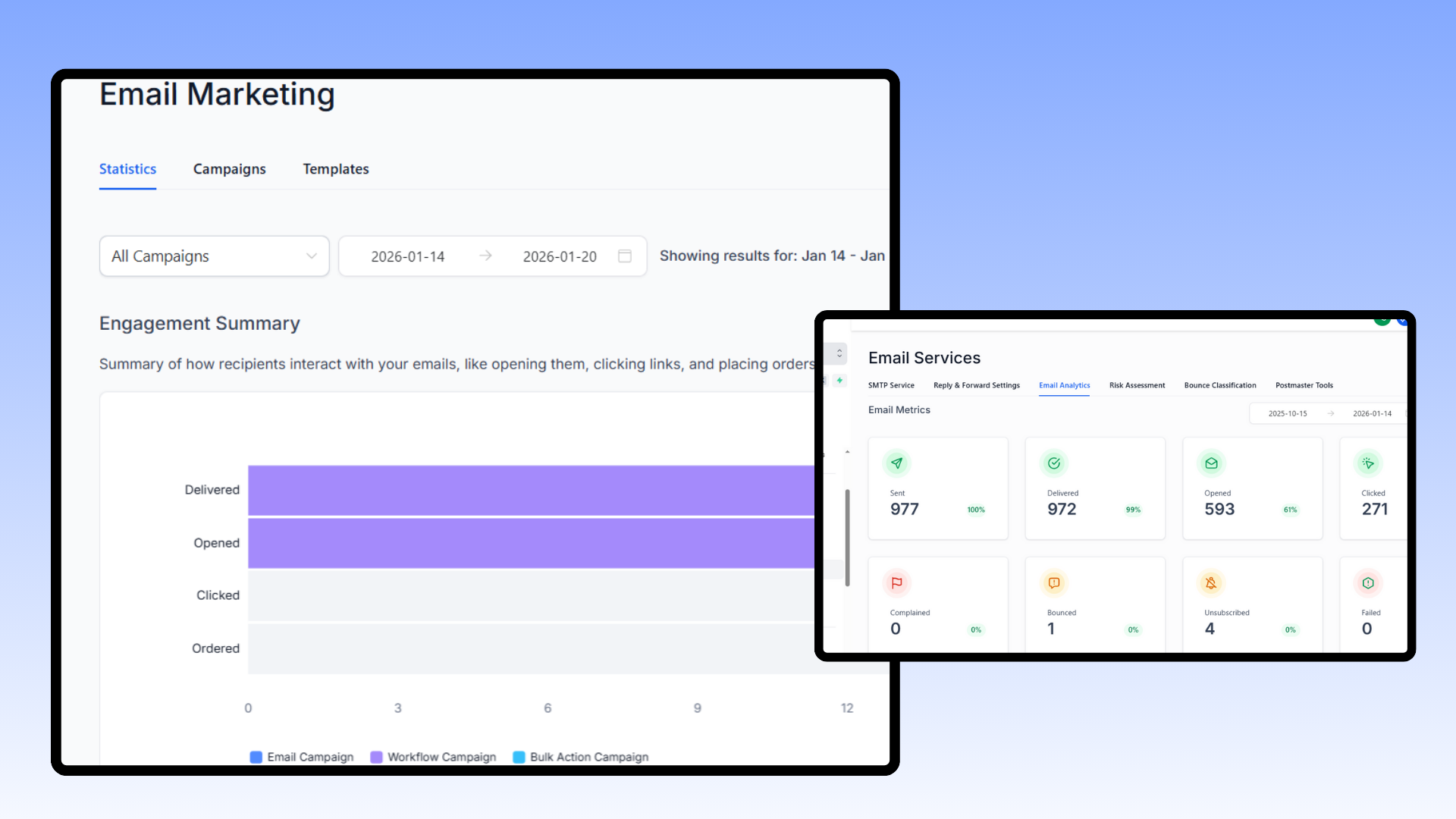
With so many tools and metrics, knowing what to track and what each means will help small business owners spend time and budget wisely. Good measurement isn’t about numbers; it’s about better decisions, better campaigns, better connections.
Key metrics for email marketing include:
Conversion rates show how many take your primary action.
List health—how engaged and active your subscribers are.
Engagement metrics—open, click, unsubscribe, and complaint rates.
List growth rate is how fast your list is growing. Five percent a month is a good start.
ROI is typically calculated as additional sales minus investment divided by investment, multiplied by 100.
A/B testing outcomes—what works better for your audience.
Engagement metrics
Open rates are the initial pulse check. They indicate whether your subject lines and sender names generate interest. A low open rate indicates your message is either being trapped in spam, coming at an ill time, or just not resonating.
Try different subject lines and send times and see which wins. CTR will tell you how your content and CTAs perform. If opens are high but CTR is low, your content may need to be clearer or more engaging.
Experiment with button copy, images, and making links more prominent. Unsubscribes are important. If too many people unsubscribe after a blast, check your content and frequency. Occasionally, providing subscribers with an option to update their preferences or select topics can help keep them interested.
Engagement scores, which aggregate opens, clicks and other activity, sort your list. Segmenting subscribers by activity enables you to target your most engaged readers with exclusive offers. Re-engagement campaigns can reclaim those who have fallen silent.
Conversion rates
Every campaign needs to begin with a simple, straightforward goal. Are you requesting that people purchase, subscribe, or install? Know what success looks like before you shoot.
Use tracking links, such as UTM codes, to track what emails and offers drive actions. This assists you in identifying what’s successful. Post-click, observe their behavior. If they fall off before completing a purchase, you might have to tweak your landing page or offer.
Retargeting campaigns let you connect with those who expressed interest but didn’t take action. Send a reminder, add an extra incentive, and ask for feedback. Sometimes that’s all it takes to close the loop.
List health
Periodically audit your list to weed out invalid or bouncing emails. It maintains your sender reputation and increases deliverability. High bounce rates might signify old or fake addresses, so purge them.
Invite your subscribers to update their info and select the content they crave. This keeps your list pertinent and helps skirt spam complaints.
Divide your list with engagement metrics. Focus on your best, most active subscribers. For less active subscribers, try win-back or let them opt down, not out.
When to seek dfy email marketing assistance
Small businesses usually initiate email marketing themselves, but there’s always the point of action to do a step back and see where you’re at. If your team is already busy with day jobs and emails start to feel like a burden, it’s time you get some done for you (DFY) email marketing assistance. If your inbox is overflowing, your time is probably not; Or you’re not getting much traction from your current email marketing campaigns, that’s a good sign.
A lot of owners attempt to manage it all, but then their emails look canned, are ignored, or end up in spam. When nothing gets noticed or inspires action, it’s time to rethink your email strategy. Platforms like NationwideLeads offer DIY email marketing with affordable DFY services available at any time in your growth journey for easy transition. Plus, you also mix between DIY and DFY cost-effectively, where you handle some of your campaigns and outsource others
Complicated campaigns require more than a send button! If you’re managing multiple promotions, want to try different offers, or have to reach people in different locations and languages, things quickly get complicated. It turns out there’s more to setting up trigger-based emails like birthday offers or reminders than most realize.
Segmentation—dividing your email list by who purchases what or their geographical location—can increase results but introduces additional complexity. If you don’t know how to or it’s too time-consuming, professional assistance is worth the investment. For instance, a local gym in Minneapolis might want to send different offers to new sign-ups, regulars, and people who haven’t been in months. Without intelligent segmentation and automation, those emails miss the target and decrease the effectiveness of your email marketing program.
ROI says the real story. If you’re investing hours each week emailing but receiving few opens or clicks, that’s wasted energy. Low open and click-through rates are frequent telltale indicators something isn’t clicking. Maybe the subject lines are boring or the email content is off.
If you don’t know what to change or how to test new ideas, a done-for-you service injects a fresh perspective. Experts can assist you in creating better subject lines, monitoring what links people click on, and optimizing email design for greater effect. For example, if you’re a bakery sending out weekly deals, personalized emails like a birthday coupon or thank you after a big order are going to yield better results than generic blasts.
Your ambitions and schedule are important. If you want speedy results or your business has a new product launching soon, delaying until you can ‘figure it out’ yourself might cost you sales. A strong email marketing strategy can accelerate the process, allowing you to concentrate on other work.
They stay on top of trends, laws, and best practices, so you don’t have to sweat missing anything relevant. This is particularly useful if you’re trying to scale fast or expand into new markets.
Conclusion
For revenue driven email blast marketing, keep it clean and keep it authentic. Use tools to filter your list, construct brief concise messages, and aim for the right audience. A stale, old-fashioned “blast” can help with brand awareness but mostly just hits junk. Smart moves such as split tests, smart triggers, tracking clicks and adding SMS, ringless voicemail and custom landing pages have a huge impact. For small shops, a good CRM like NationwideLeads with all these in one place helps a lot. Think tracking replies, not just blasting. Actual people have improved open rates and do not waste time or dollars. Try a CRM for free today or request a consultation to construct your next campaign cost-effectively
Frequently Asked Questions
What is an email blast in marketing?
An email blast is mass emails that goes to a large audience all at once. It’s designed to distribute offers, updates, newsletters, or announcements quickly. However, the best practice has shifted towards more effective email marketing strategies that focus on targeted personalized emails.
How can I improve the effectiveness of my email blasts?
Segment your audience segments, personalize your email content, utilize effective email marketing strategies with explicit calls to action and triggers to other marketing channels to like SMS, ringless voicemail, landing pages for optimized engagement.
What are some common examples of retention emails?
Retention emails, including welcome messages and exclusive offers, are effective email marketing strategies that significantly enhance customer engagement and foster long-term relationships.
Why is automation important in email marketing?
Automation saves you time and ensures your email marketing campaigns are sent on time. It allows for behaviorally relevant email messaging, a tactic that significantly boosts engagement and conversion rates.
How do I measure the success of an email blast campaign?
Monitor open, click-through, and conversion rates in your email marketing campaigns. This data reveals what resonates and where to enhance.
When should I consider Done-For-You (DFY) email marketing services?
Go DFY if you don’t have the time, expertise, or resources to create effective email marketing campaigns. Pros handle strategy, copy, and analytics, boosting your email marketing results.
Is email blast marketing suitable for local audiences?
Yes. Personalizing your email marketing campaigns for a local audience prioritizes connection and credibility.