
Micro-influencer marketing strategy: Unlocking the potential for small businesses
A micro influencer marketing strategy leverages those with modest yet highly engaged followings to assist brands in reaching more purchasers in real time. You leverage existing partnerships and expertise from influencer marketing management agency to grow faster or build your over time
Small businesses love working with them since they are typically cheaper and generate better engagement. Brands can select micro influencers that are aligned with their values and address their audience.
To maximize results, device a DIY strategy to be goal oriented and maintain open conversations with each influencer or partner with agencies that can drive connections cost-effectively. We review the benefits of working with micro influencers and how to use them productively
Key Takeaways
With micro influencer marketing, brands can forge real relationships that translate to increased credibility and resonant engagement with niche audiences.
By emphasizing engagement and niche rather than followers, you can help ensure that your campaign’s messages actually reach the right consumers and resonate with them.
Working with micro influencers is affordable, helping brands stretch marketing dollars and get significant returns without exceeding the budget.
Some structured planning using influencer marketing management agency, goal setting, and relationship building with influencers will go a long way toward your success and brand loyalty in the long run.
By leveraging analytics tools and tracking KPIs such as sales, conversions, and sentiment, the brand can measure impact, optimize campaigns, and prove ROI.
By combining influencer marketing with paid ads, SEO, and content repurposing, you enhance your reach and build a cohesive marketing strategy that scales around the world.
Table of Contents
What are the benefits of micro influencers?
Create your micro influencer marketing strategy
Scale your program without the chaos
Why should brands work with micro influencers?
How do I find the right micro influencers for my brand?
What should a micro influencer marketing strategy include?
How do I measure the success of micro influencer campaigns?
Can micro influencer programs scale as my brand grows?
How can I maximize the impact of micro influencer marketing?
What are the benefits of micro influencers?
Micro influencers (typically 10k - 100k followers) are crucial for small businesses aiming to expand their reach on a limited budget. They provide brands with an opportunity to engage with actual people in a more authentic manner than big-name influencers. With their smaller but more engaged followings, micro influencers enable you to reach the right people and develop deeper relationships for long-term impact.
So what are the benefits of micro influencers? Here’s the breakdown of the main benefits.
1. Authentic connection
Micro influencers foster that sense of community you don’t normally get with celebrity endorsements. Their content is personal, typically telling genuine narratives, everyday advice, or ways your product integrates into their lifestyle. This provides the opportunity for more intimate connections between yourself and your audience.
Followers view these influencers as peers rather than distant celebrities, so their recommendations are more believable. When micro influencers tell their honest experiences, it’s easier for people to trust your brand. Over time, this converts casual purchasers into fervent enthusiasts.
For instance, a local fitness coach checking out your wellness app lends your business credibility and generates a consistent stream of passionate users.
2. Higher engagement
Engagement rates for micro influencers can be as high as 3 to 8 percent, much more than the 1 percent or less for macro-influencers. Their followers are not just watching; they are liking, commenting, and sharing. Increased engagement increases your brand’s exposure, and comment feedback can allow you to see what’s working.
Take a look at which posts are getting the most engagement and then adapt your strategy accordingly. Have micro influencers employ polls, Q&A sessions, or contests to drive engagement. Monitoring responses and conversations provides you with insight into your audience, what they think, and what concerns them.
3. Niche audiences
Micro influencers tend to be topic or industry specific. They could discuss vegan recipes, gadgets or travel destinations. This allows you to align your brand with influencers whose audience already cares about what you’re offering.
It’s simpler for a small business to get noticed in a niche group than in a mass audience. Leverage tools to discover speakers for your audience. Then, collaborate with them on campaigns that fit the group’s interests. Custom messages or limited-time offers earn more notice when they communicate in the language of the community.
4. Cost efficiency
Working with micro influencers stretches your marketing dollars. Many charge under $100 per post, a bargain compared to the thousands some macro influencers can command. For small businesses, this translates to being able to run more campaigns or test different approaches without blowing the budget.
Some micro influencers are willing to do product swaps or affiliate deals, so you only pay when you see results. Always measure your output against what you spend and what type of new leads or sales you’re able to convert. This helps you observe which influencers provide you the best value for your money.
5. Trustworthy content
People trust micro influencers because their recommendations don’t sound scripted or forced. Select partners with a reputation for candid reviews. Their followers trust them, so your brand becomes trustworthy by association.
Connect with your influencers and, of course, your followers. Share their posts, spotlight their stories, and invite them to be transparent about brand collaborations. This makes your marketing seem less like advertising and more like genuine advice.
User-generated content from these influencers increases your credibility and demonstrates to prospects actual results.
Find your ideal partners

Finding your perfect partners is the foundation of building a powerful micro influencer marketing strategy. That’s about more than just matching interests. It’s about finding folks whose voice, style, and ethics align with your brand and business while talking to the right audience.
Using influencer marketing platforms like Upfluence or AspireIQ can help accelerate your hunt by filtering by location, audience interests, and engagement rates. This is useful, but it’s not the end.
Develop a checklist to score influencers prior to contacting them. Begin with relevance—do their content style match your brand’s tone? Next, look at reach, but don’t just count followers. Engagement rate is more important than follower count; an influencer with 15,000 followers and lots of engagement can be worth a lot more than one with 100,000 who gets little.
Give your list some real partners. Make sure their audience is real, not bots, and they have open conversations in comments. Stability is important as well—are they posting frequently and keeping a coherent message? Make notes on their previous brand work, if any, to see if their aesthetic aligns with yours.
Create a database of qualified names and information so upcoming campaigns are simpler to implement and run.
Beyond follower count
Don’t concentrate solely on follower counts. Check out average likes, shares, and comments per post. True value is usually found in the smaller audiences that respond, inquire, and share.
For instance, a food blogger with 12,000 followers who experiences 800 comments per recipe is probably more powerful than a larger account with fewer responses. Examine the composition of their audience. Are their followers the same age, interest, or location profile as your customers?
See what their content style is. Does it come across as organic or forced? Ensure their voice will align with your brand’s communication. Focus on those who engage authentically with their community, not those with a larger, more silent audience.
Vetting for values
Check analytics aside, does the influencer’s style align with your brand mission and values? Check their posts and previous collaborations, search for alignment and seriousness.
It pays to jump on a video call or interview for a few minutes to verify their fanaticism for your products or service. This allows you to identify red flags up front. Once you’re ready to work together, establish clear expectations about how your brand should be portrayed and what you both want to achieve.
This minimizes the risk of misalignment and establishes trust.
Analyzing engagement
Use analytics to monitor how each influencer’s audience engages. Look for your perfect partners and compare click-through rates, shares, and saves, not just views or likes.
Notice feedback in comments. Are people inquiring about your product or simply tagging friends? Utilize this knowledge to adjust your partner list for upcoming campaigns. Data informed decisions lead to greater ROI and long-term brand perception.
For small business owners, navigating all these requires dedication. If you are struggling for time, consider an influencer marketing management agency or a even mix of DIY and done for you support to help you maximize your micro influencer marketing strategy
Create your micro influencer marketing strategy
A micro influencer marketing strategy links small businesses to social media celebrities with 10,000 to 100,000 followers. These niche-focused individuals can generate up to 60 percent more engagement than influencers. Crafting a plan means defining objectives, establishing a campaign framework, content co-creation, and relationship building for sustained impact.
Key objectives for your strategy may include:
Raise brand awareness among targeted audiences
Increase product sales or conversions
Drive traffic to your website or landing page
Gather user-generated content for marketing use
Boost engagement rates on social media
Build long-term partnerships with influencers
Expand reach to new market segments
Define clear goals
Begin with establishing concrete, quantifiable goals for your campaign. Determine if you want to amplify brand awareness, accelerate sales, or expand your community. These should align with your broader marketing goals for a consistent strategy.
Additionally, develop your micro influencer marketing strategy. Review your progress on a scheduled basis and adjust your targets according to performance or changes you observe in your market.
Structure your campaign
An ambitious campaign requires a hard schedule. All phases, deadlines, and checkpoints keep things on track. Dedicate resources for content, outreach, and result tracking.
Outline your micro influencer marketing plan. Ensure everyone involved knows what they’re doing, from message copying to metrics tracing. Do not forget to always craft a detailed campaign brief.
This should detail the objectives, key messages, content types and formats, and success metrics. For instance, three stories and one static post from a micro-influencer, with each deliverable recorded in your plan.
Co-create content
Collaborate with your influencers to craft content that resonates with your audience and theirs. Allow them to pitch creative concepts and add flair to sponsored posts while keeping it consistent with your brand’s look and voice.
Hold brainstorming sessions on what kind of content they could create, such as short videos, product demos, or blog posts. Provide influencers with sufficient latitude to talk naturally because authenticity is essential for traction.
For instance, if you sell eco-friendly products, get influencers to talk about their authentic experiences with your products.
Foster relationships
Keep your micro-influencers marketing strategy active by reposting their material, offering honest criticism, and thanking them in public for their effort. Offer perks like early access to new products, sneak previews, or invite them to brand events, even virtual ones.
These gestures cultivate loyalty, and long-term relationships tend to be more effective and less expensive. Many micro-influencers charge around $250 per static post, so a continuing collaboration is cost-efficient.
Measure what truly matters
Micro influencer marketing yields best when you measure what really matters to your business objectives. It’s tempting to focus on vanity metrics, but savvy brands tread where the needle really moves—real KPIs, actionable data, and genuine feedback.
With micro-influencers capable of generating up to 60% more engagement than bigger names and 79% of consumers trusting user-generated content, the importance of measuring the right metrics has never been greater. Measurement must be constant and dynamic, shifting as objectives change and platforms transform. Attribution modeling and clear metrics help teams justify investments, build stakeholder trust, and plan smarter campaigns.
Key performance indicators
Audience sentiment shows you if your message resonates. Social listening tools such as Brandwatch or Sprout Social can help you understand people’s sentiments toward your brand post-campaign.
Then visualize your KPIs with tools like Visme so your team and stakeholders can easily see what’s working. Don’t simply gather data—use it! If engagement falls under targets, modify your material or messaging to fill what’s lacking.
Tracking sales
Measuring what matters specifies your goals. Tracking sales from micro-influencer campaigns means establishing explicit mechanisms. Use unique discount codes or affiliate links for each influencer, so you can see which sales drift through where.
This allows you to attribute revenue directly to the campaign instead of guessing. Examining sales data in combination with reach and engagement lets you glimpse the actual impact, not just superficial interest.
ROI isn’t just pixels on a spreadsheet. Give your influencers sales results to share. It drives them, demonstrates their worth, and sparks more inspired, committed collaborations. Attribution modeling ensures credit where it is due, particularly when sales occur across multiple channels.
Calculating ROI
ROI calculations should transcend direct sales. Account for brand consciousness and content and relationships that endure. Periodic reviews allow you to identify trends and defend future budgets to stakeholders.
ROI data tells you which influencers are worth deeper partnerships and which strategies need to shift. This continuous review and iteration keeps your marketing strategy keen and adaptive.
Scale your program without the chaos
Scaling micro influencer marketing requires more than just understanding influencer economics. Managing programs at scale requires wrangling tons of moving pieces and preventing mayhem. Manual outreach and tracking might work for a handful of partnerships, but for hundreds, that’s when the chaos sneaks in.
Crafting a solid system allows you to discover, vet, and track a whole lot of influencers, maintain clarity, and enable genuine scale. Sometimes a mix of DIY and done for you expertise provides the most effectively way to to scale without burning out. Here’s how to avoid the typical pitfalls and implement intelligent infrastructure.
Communication breakdowns—missed emails, lost messages, unclear direction
Inconsistent messaging across influencers and posts
Delays due to slow content approvals or feedback loops
Unclear roles, steps, or accountability in campaign workflows
Data scattered in multiple spreadsheets or emails
No standardized guidelines for deliverables or brand safety
Hard to track campaign performance or measure ROI
Lack of scalable onboarding or payment processes
Manual management pitfalls
Handling influencers manually becomes disorganized quickly. When you organize on never-ending email threads and spreadsheets, you risk losing conversations and critical information. This frequently results in miscommunications, forgotten deadlines, or incoherent brand messaging.
Once you are working with more than five or ten influencers at a time, the possibility of chaos increases rapidly. Having an influencer marketing management agency like The Affiliate Pros or NationwideLeads can help you scale without burning out. If you are on a tight budget, consider a mix of DIY and expert support to unify your message, establish easy, standard rules for every campaign. Deliver one brief to each influencer. Use checklists to jog the memory on both sides.
This simple step alone can reduce chaos and crossed signals. Delays are commonly caused by sluggish approvals. Something for reviewing posts, be it set review windows or a shared folder online, makes things faster. When everyone knows where and how to submit drafts, it’s easier to keep campaigns moving.
Finally, document your workflows either with flowcharts or a shared document. All involved should know who does what, when, and where to find the newest updates. This aids progress monitoring, bottleneck identification, and accountability transparency.
The automation advantage
Automation tools like a CRM platform with affiliate marketing tools remove a lot of the grunt work from influencer management. Use platforms like NationwideLeads that allow you to search, contact, and monitor dozens or hundreds of micro-influencers simultaneously. They help organize contracts, briefs, and content all in one place.
Scheduling tools are essential. They allow you to schedule posts for various time zones and channels, so you aren’t posting manually at inconvenient hours. This is critical for brands with international audiences or when juggling multiple campaigns at the same time.
With automated reporting, you don’t need to rebuild reports from scratch every time. Metrics such as reach, engagement, and conversions are tracked in real time, freeing you to instead focus on perfecting your creative strategy.
Other influencer platforms integrate all of these into one dashboard so you can manage outreach, approvals, posting, and payments. By automating the grunt, small teams can do big campaigns. This allows you to try new content types, test creative ideas and optimize with data without getting lost in emails or spreadsheets.
When to hire an agency
If you don’t have the time, tools or expertise, outside help can make sense. It’s difficult to operate huge campaigns or collaborate with hundreds of influencers without your own full-time team. An agency has the expertise, infrastructure, and plug-and-play processes to take control of chaos.
Verify the agency’s track record before you commit. Request case studies and evidence of ROI. Get them to really understand your brand, your audience, and your goals. Seek out partners who appreciate openness and will exchange information.
Collaborate with agencies aligned to your values. With clear communication and shared objectives, nobody is confused or wondering if the campaign is lost. Agencies can free your team, enabling you to concentrate on high-level strategy and campaign insights.
Integrate for maximum impact
Micro influencer marketing is most effective when incorporated for maximum impact with other strategies. For small businesses, that means not just running influencer campaigns, but integrating them with paid ads, SEO, and strategic content repurposing for greater return. Mixing these channels reinforces brand awareness, converts more, and keeps your marketing machine humming.
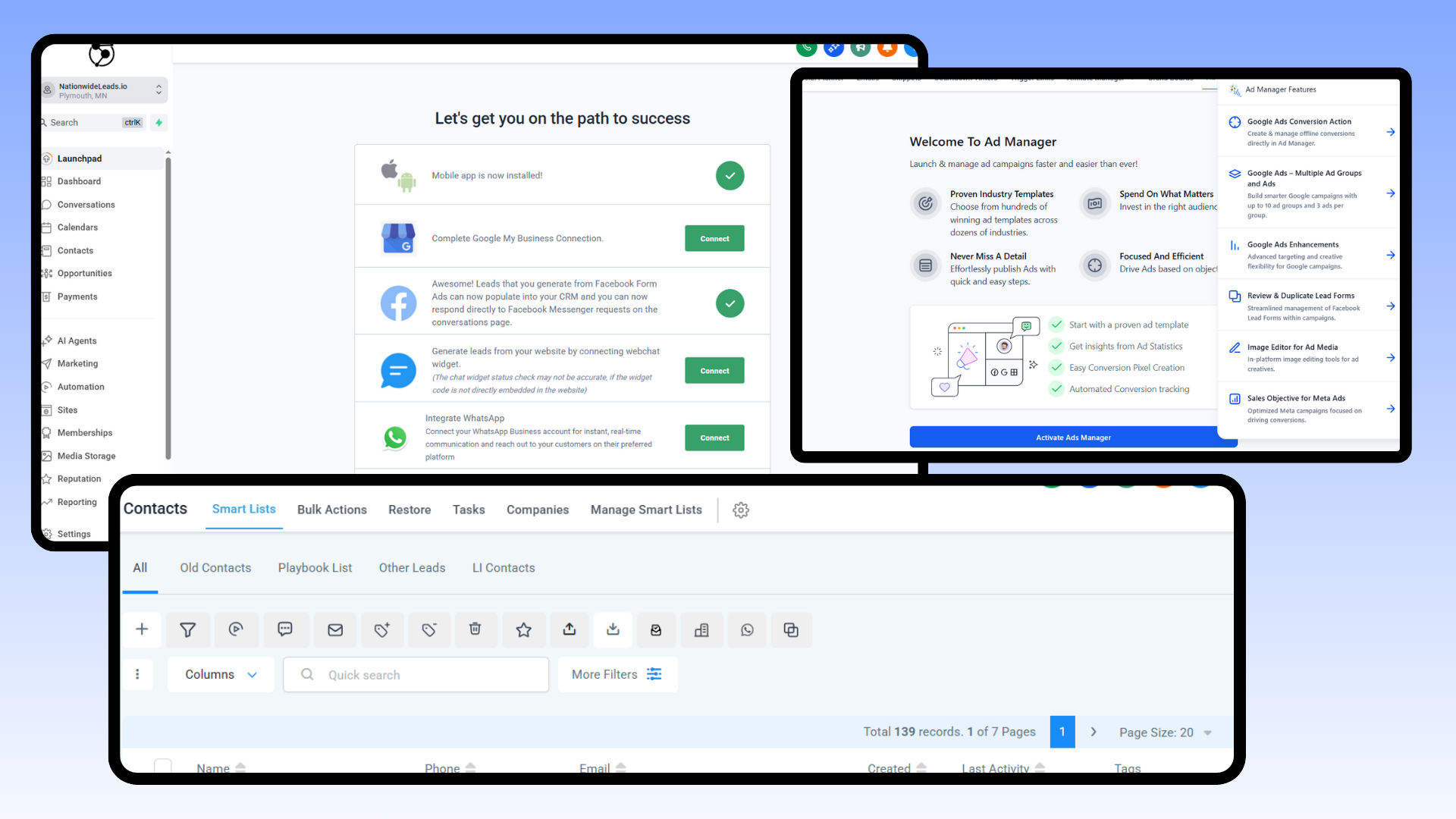
When you integrate influencer marketing with other tactics, you can monitor results, lower customer acquisition costs, and build even more trust with your audience. Tools like NationwideLeads help you achieve that objective holistically in one place.
Holistic approach:
Run influencer marketing in parallel with paid ads, emails, and organic social.
Utilize discovery tools to identify the perfect micro-influencers for your niche and establish clear objectives from the outset.
Draw up simple contracts to establish expectations and equitable compensation, particularly when collaborating with a bunch of creators.
Rely on influencer platforms to manage contracts, payments, and performance analytics so you don’t lose sight of deliverables or miss deadlines.
Repurpose influencer content across emails, blogs, and social to wring the most value out of every post.
Amplify with paid ads
In fact, boosting influencer posts with paid ads helps you reach even further than their followers. Small businesses can easily recycle top-performing influencer content into ad creatives for Facebook, Instagram, or TikTok. This taps into the influencer’s trust and allows you to customize the targeting to specific segments by age, location, or interests, which aligns with your campaign objectives.
Leverage ad campaigns with influencer photos or testimonials. Folks react to genuine voices, and micro-influencers typically boast up to sixty percent stronger engagement than mega-influencers. Track ad performance, particularly regarding engagement and conversion.
If a small creator with eighteen thousand engaged followers sends more clicks or sales than a bigger but less engaged influencer, adjust your ad spend accordingly. Directly amplifying influencer content with paid ads tends to generate low customer acquisition cost, often twenty to thirty percent less than brand-only assets.
Fuel your SEO
We’re optimizing influencer content for search engines to help our organic reach. Request influencers to weave in relevant keywords, such as product names, location, or search questions, organically throughout their posts. Work with influencers to get backlinks to your site from their blogs or YouTube channels.
These backlinks are SEO gold and sustain referral traffic. Measure by observing organic ranking, traffic, and backlink profile shifts. Use tools such as Google Analytics or simple tracking spreadsheets.
Over time, you’ll identify which influencers generate the most impactful SEO outcomes. This information should inform future collaborations and content plans.
Repurpose content
Repurpose influencer content across all your channels for maximum reach. For instance, transform an influencer’s Instagram review into a blog post, a testimonial on your website, or a graphic for your next email. A content calendar helps you plan and space out this material so you’re not rehashing yourself or overlooking important dates.
Have influencers publish their own original or repurposed content on their own platforms. This multiplies reach and keeps your brand top of mind. Repurposed content is brand consistent, cost saving, and builds an audience.
Conclusion
Micro influencer marketing is perfect for small brands seeking rapid victories on small budgets. Tiny teams can reach real fans who care what they share. Brands get more trust, more clicks, and more sales from these candid voices. Begin by selecting people who match your vibe and speak your lingo. Establish obvious guidelines, monitor your stats, and be straightforward. Use expert including mixing DIY and done for you to grow faster and cost-effectively. Use tools that help you track wins and help you market holistically. Give it a couple of mini runs, test various post styles, and adjust as you go! Try a platform for free or chat with experts for practical advice. Begin small, discover talent, and see your emblem sprout.
Frequently Asked Questions
What is a micro influencer?
A micro influencer is someone with a social media audience generally ranging from 10,000 to 100,000. They’re highly engaged and targeted, which is why they’re great for targeted marketing strategies.
Why should brands work with micro influencers?
Micro influencers tend to have engagement rates that are higher and their followers place more trust in them. Brands gain from authentic promotion, cost-effective campaigns, and enhanced resonance with niche audiences.
How do I find the right micro influencers for my brand?
Find influencers who align with your brand values, have an active audience, and produce content related to your products. Ideally, utilize influencer search tools and examine audience demographics for the most precise fit.
What should a micro influencer marketing strategy include?
A solid plan features specific goals, target audiences, innovative directions, partnership conditions, and success criteria. Strategizing ensures your campaigns are seamless and effective. Consider expert help including mix of DIY and done for you to grow faster and so you don't burn out
How do I measure the success of micro influencer campaigns?
Measure engagement rate, reach, conversions, and ROI. Concentrate on quality conversations and business results, not follower hype.
Can micro influencer programs scale as my brand grows?
Yes, micro influencer programs scale when you marketing holistically. Use tools like NationwideLeads with influencer management tools, automated workflows, and long-term partnerships help where you can keep growing without giving up control or quality.
How can I maximize the impact of micro influencer marketing?
Tie micro influencer campaigns to your larger marketing strategy. Coordinate messaging, collaborate on results, and feed insights back into campaign development for improved future performance. Plus don't be afraid to use expert help cost-effectively in your growth journey