5 best customer journey automation CRM features for mortgage brokers in 2026
Good CRM software for small businesses are also customer journey automation platforms, a business tool that helps small businesses map and manage every touch a customer makes, from first touch to repeat sales.
It interleaves activities such as emails, texts, and ringless voicemail follow-ups, so owners remain on top of every lead without dropping actions.
For example, with drag-and-drop tools and one-click steps, first-time users can set up flows with CRM features that auto checks market rates against contact's rates and monitor results for mortgage brokers refinance lead generation automation
Let’s take a look at how this could work for your business and how to evaluate the best platforms to to help you succeed end-to-end and grow cost-effectively
Key Takeaways
With customer journey automation, you get more than just personalization and timeliness. You get a better experience and increased efficiency.
When you map and segment the customer journey, you can target your communication so it has the maximum chance of turning leads into lifelong clients.
Automated refinance rate monitoring within CRM software of loan officer like NationwideLeads and nurture sequences ensure nothing falls through the cracks and new opportunities get identified fast.
How to choose a customer journey automation platform. You’ll need to evaluate platforms based on features, integration, budget, user experience requirements, and support preferences.
Regularly score and measure key performance indicators such as lead velocity, conversion rates, and client lifetime value to evaluate and optimize your automation efforts.
Remain informed about technology trends and train your team regularly to adapt to changes and keep your customer journey automation strategy effective to stay competitive.
Why automate the customer journey
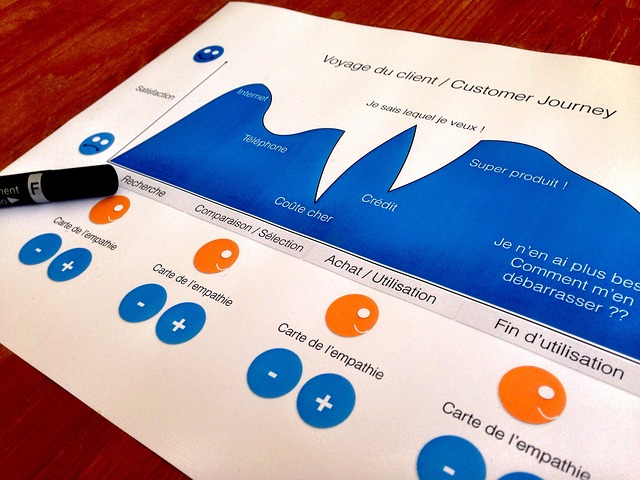
Automating the customer journey refers to employing software to direct, monitor, and influence a customer’s progression through marketing, sales and customer experience from the initial point of contact all the way through to client and beyond.
For small businesses or solopreneurs, this can sound massive but with the right platforms it can be quickly streamlined. It’s crucial for making campaigns work smarter, not harder.
With a customer journey automation platform, you can DIY and/or use cost-effective DFY services to deliver the right message at the right time, reduce busywork, and make every customer feel seen without increasing staff or hours.
Enhance customer experience by providing timely and relevant communications.
They anticipate fast, constructive solutions. Research indicates that almost one-third of consumers want a reply on social media within a day. With automation you can respond immediately, without waiting for someone to open an inbox.
Picture this: a lead completes a site form at 6 a.m. Your system can immediately send a thank you, respond with FAQs and provide next-step offers, even while you slumber. This type of urgency with attention cultivates trust and loyalty, the kind of trust and loyalty that makes customers think twice before abandoning your brand.
It keeps everyone in the loop with updates, reminders and offers that are aligned with what they want, not just what you want to sell.
Increase efficiency by reducing manual tasks associated with lead management.
Hunting down leads manually, transferring info between spreadsheets, or copying emails devours time. Automation takes these tasks off your hands.
For instance, when a new lead signs up, it logs details, scores the lead, schedules follow-up, and adds them to lists for future campaigns. That saves hours every week and frees teams to focus on hard work, like resolving customer problems or brainstorming fresh offers.
That’s a godsend for small teams or solo owners who can’t afford to bring on more help.
Improve lead conversion rates through personalized engagement strategies.
Personal touch counts. Automation doesn’t mean blasting the same message to everyone. Platforms can take what you know—what pages someone visited, what emails they open, or what they buy—and tailor messages to each individual.
Somebody who clicked on a summer offer but didn’t purchase could receive a discount reminder. Someone else who always opens tech tips might receive more how-to guides. It’s this type of intelligent, individual outreach that converts hot prospects into customers and new customers into lifelong advocates.
Utilize data analytics to better understand customer behavior and preferences.
Automation tools collect a ton of data at every step: what people click, how long they stay, what makes them leave. Armed with this intelligence, you can observe what is effective and what is not, and respond quickly to correct or adjust your strategy.
You can generate reports to identify trends, experiment with new ideas or understand why certain campaigns perform better than others. Robust analytics make it easier to scale up. Once you know what drives results, you can repeat it, regardless of how large your customer list grows.
How to automate refinance lead generation
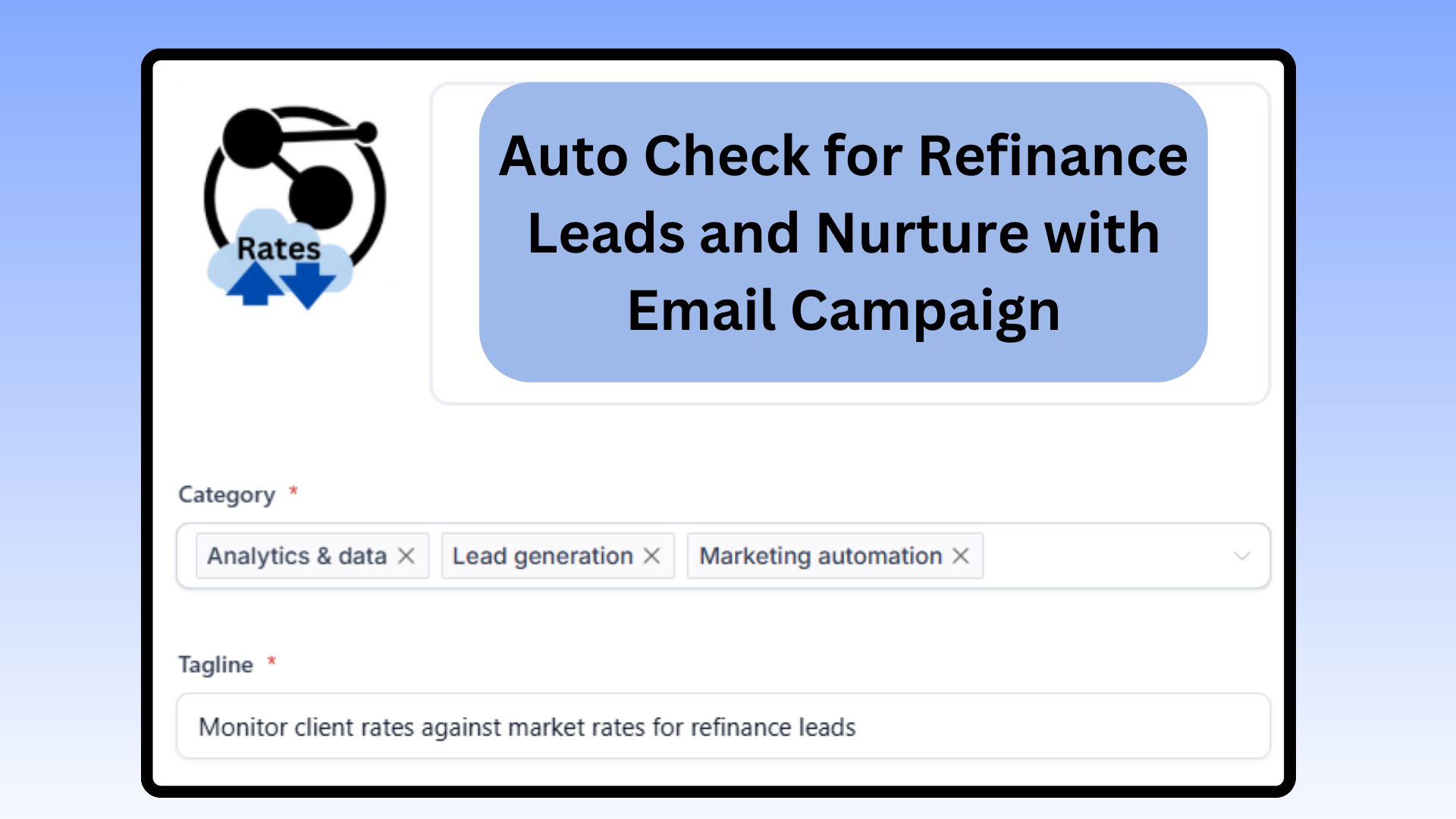
Refinance lead generation automation is when leveraging CRM features that auto checks market rates against contact's rates to identify, qualify, and engage leads with less manual intervention. This drives efficiency, makes leads higher quality, and enables small businesses to compete without flooding their teams.
The right automation platform transforms this messy manual process into a streamlined, data-driven workflow optimized for growth.
Steps for implementing automated systems for refinancing lead generation:
Use existing client mortgage rates, collect new leads lists or set landing page opt-in forms.
Connect contacts automatically to workflows for smart lead qualification.
Specify qualifying parameters between contacts' current rates and the latest market rates
Workflow monitors contacts' rates and launch targeted campaigns automatically.
Automated email, SMS and even personalized ringless voicemails outreach to drive .
Get engaged to finalize and continuously refine workflows and lead criteria for best results.
1. Map the journey
Begin by developing a customer journey map. This reveals all touchpoints from the initial web visit to post-refi follow-up. Pinpoint critical stages, such as initial inquiry, rate quote, and document submission, so you can pair the right messages to each.
Employ journey mapping software for clear visuals and actionable insights. Check real customer metrics to find out where they abandon or stall. This assists you in sharpening your message and schedule.
Review heatmaps, click paths, and even session replays to identify friction points. The aim is to make every step easier and more engaging for users, regardless of their context or device.
2. Segment your contacts
Segment your contacts by refinance need, loan type, and engagement. Analytics flags hot leads, such as strong credit, high rates, and recent inquiries. Then, you will be able to send more personalized messages that actually seem pertinent.
Keep your segments updated as individuals progress through the journey. For instance, shift somebody from ‘new inquiry’ to ‘rate quoted’ after they ask for information. Personalization matters.
Emails with custom subject lines and content outperform bulk blasts every time. Segments should rotate as market or customer needs change, keeping your outreach fresh.
3. Automate rate monitoring
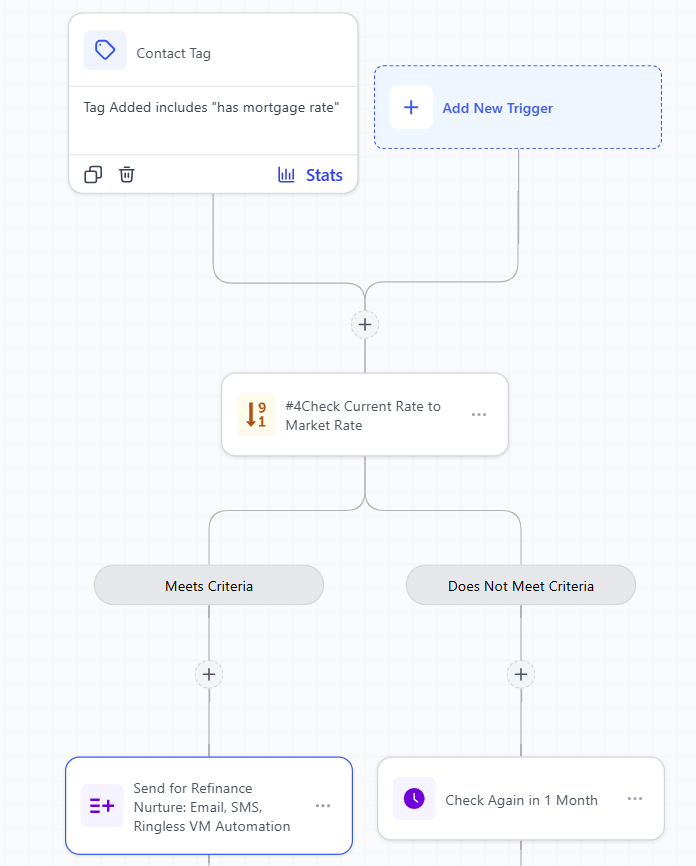
Using automated rate monitoring to follow market trends and compare them to each client’s current rate. When a rate falls below that threshold, it pings your CRM workflow for client outreach.
This allows you to proactively reach out at the ideal moment without mining spreadsheets by hand. With compliance in mind, adhere to data privacy regulations and gain consent for rate tracking messages.
Modern CRM tools can easily manage rate triggers and alerts with very little configuration, so tiny teams achieve huge output.
4. Build nurture sequences
Automated nurture sequences leverage email, SMS, and sometimes ringless voicemail to keep leads warm. Kick off with a welcome series, then continue with education, offers, and reminders.
Try different subject lines, content, and timing. Keep an eye on open and click rates to identify winners and losers. Don’t be afraid to adjust the flow.
If some message gets ignored, hit them with a short SMS or a quick call instead. You want to continue the conversation without being pushy.
5. Deploy capture forms
Landing pages with obvious capture forms are a must for any refinance campaign. Keep forms short and request only what you require. Ensure they look great and load quickly on mobiles.
Connect each form to your CRM so new leads stream directly into your database. A/B test to find out which versions get the most responses.
At times, a tiny shift such as an alternate call to action can increase your conversion rate by a couple of percent. Test and track, then hang on to what works.
Choosing your automation platform
Picking the right customer journey automation platform is a big choice for any business looking to grow. Proper tool like NationwideLeads assists you in operating your campaigns, staying on top of leads, and working smarter. Small businesses and solopreneurs will want to consider cost, ease of use, support, and compatibility with their existing setup.
Automation depth, price, and CRM integration all matter, and the platform’s user interface influences the entire experience for your team.
Core features
A good automation platform should provide you with powerful data handling capabilities. You’ll want one that makes it easy to store, track, and segment your contacts. Seek platforms that map your customer journey, so you can hear every step your leads take and identify where they fall off.
Analytics is another essential. Having visibility into which campaigns convert, where users click and what actions generate purchases is crucial. Lead nurturing should be easy to configure and execute. You want to be able to build automations that send emails, texts, or notifications based on what your leads do.
Custom workflows let you fit the software to your business, not the other way around. Build unlimited flows with more than 40 branches with no slowdown, which is useful if you have many steps or special requirements.
System integration
A solid automation platform will seamlessly integrate with your existing POS and LOS tools, facilitating customer journey management. It simplifies life and prevents you from reinventing the wheel, especially when it comes to customer journey mapping. Look for simple connections to LOS apps, like ARIV
APIs are crucial for success. If your business has specific needs, the ability to construct custom links between your tools enhances your customer journey analytics capabilities. Always test these links before you go live to ensure smooth operations.
When you migrate, rebuild your automations on the new platform and only bring over clean, current contacts. Running both systems side by side for a few weeks allows you to catch any problems before you switch entirely.
User experience
Ease-of-use is paramount. If your team can’t figure out the platform quickly, they simply won’t use it. Always collect input from anyone who’ll operate in the system. Their early insights catch confusing steps pre-rollout.
Training resources, such as videos or guides, ease adoption for all. See how your team uses the platform in the initial weeks. If people bypass it or are stymied, that’s a warning sign. Addressing minor issues promptly can prevent major headaches down the line.
Done for you support
Done for you (DFY) support is a lifeline, particularly for small teams that can mix DIY and DFY cost-effectively without losing control. Select your automation platform have a reputation for responsive, useful service. Free onboarding resources can get your team up and running without frustration.
Continued service is equally crucial. You want support when they break and consistent updates so your system stays current. Some vendors will even provide cheap or free assistance to get you set up, which will generate trust and make switching worthwhile.
The hidden value of automation

Customer journey automation is about much more than just saving time or reducing costs. It lies at the heart of how small biz can cultivate genuine, long-term connections with customers and meanwhile keep their crews lean and mean. When automation is interwoven into customer touchpoints, you can hit a trifecta of objectives: increasing productivity, delighting your customers, and developing more intelligent marketing campaigns.
Automation offers several key benefits:
Speeds up responses to customer questions or complaints
Liberates teams from repetitive tasks to tackle grander work
Gives clear, data-backed insights into what customers want
Simplifies sending the appropriate message when it matters most
Fills in the blanks where content is lacking
Provides a frictionless and personalized customer experience from end to end
Lifts customer retention and value over the long run
Automation reveals customer behavior patterns that are too easy to overlook when recording information by hand. When a CRM platform records each email open, link click, or support request, the data begins to reveal patterns, such as which content is most engaging or which pain points result in disengagement.
For instance, if customers continually inquire about shipping times, that’s a hint to include clearer information in emails or on your site. The data from these tools doesn’t just track results; it shapes new campaigns too. Journeys are 30 to 40 percent more predictive of satisfaction and churn than single interactions, so leveraging that information gives your team a real advantage.
Teams perform better when they’re not mired in small, repetitive tasks. Automation may increase template revision efficiency by 67% so that tasks that formerly required hours now require minutes. Automated responses—think AI-powered chatbots—can answer common questions 24/7, liberating your staff to deal with more complicated tasks.
This transformation enables small groups to accomplish more with fewer resources, a major victory for soloists or small businesses who need every minute to matter.
Customers want quick, personal service nowadays. In the U.S., nearly one in three anticipate responses to social media inquiries within 24 hours. Automation aids in fulfilling these expectations by dispatching triggered messages, reminders, or offers of discounts at perfectly timed moments.
It fills content gaps. If someone falls out of the sales funnel, you can deliver a follow-up or additional information to draw them back in. This kind of personal touch builds trust and makes customers feel seen, not just sold to. Improved personalization can raise customer lifetime values by 15 to 30 percent through more firm retention and connections.
Measuring your automation success
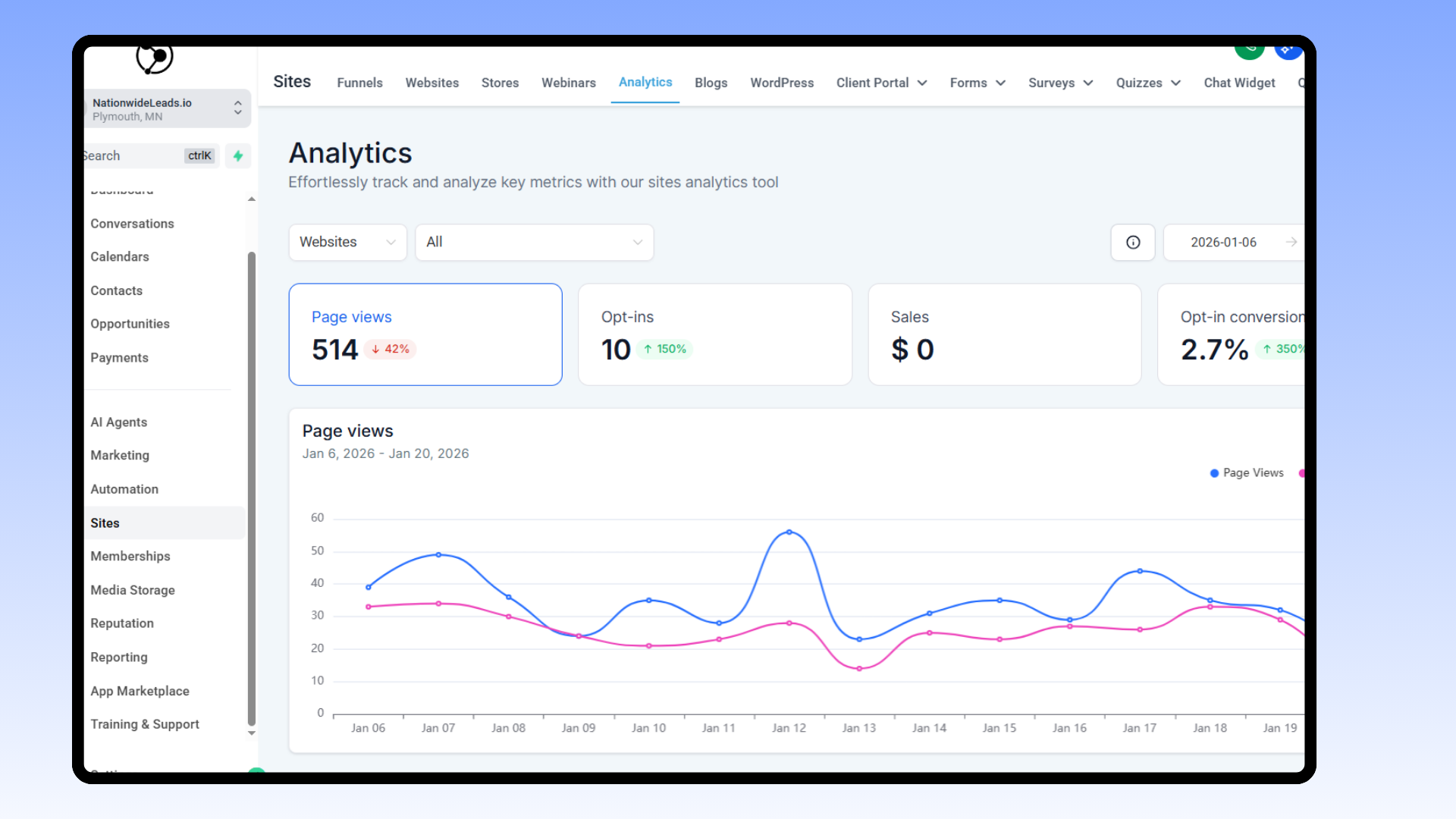
If you want to know whether your customer journey automation platform is actually working, you have to measure it! This involves following how visitors interact with your business at all steps and auditing how fluid their journey is. Automation should help you meet your customer’s needs better. Eighty-five percent of organizations say it does.
Journeys are thirty to forty percent more predictive of satisfaction and churn, so tracking them matters. Complaints can go down twenty-five percent by automating because that demonstrates how much more frictionless things can become. To get real value, set targets and watch your numbers. Measure your automation wins with analytics tools that track what matters—lead velocity, conversion, and client value. Data will be your beacon, from initial outreach to post-sale.
Lead velocity
Tracking how quickly leads are moving down your pipeline indicates whether your process is slick or sluggish. If they get held up, you can identify where and fix it. Lead follow-ups speed up and don’t go cold with automation. You can send reminders or next steps so no one slips through the cracks.
Measure your automation success against lead speed. Lead speed typically gets faster and you waste less time. Segment leads by type or source to determine if some groups progress more quickly than others and direct interventions to where it’s sluggish.
Conversion rate
Conversion rate indicates the percentage of leads who convert to buyers. You should measure this for each channel: email, ads, chat, and site forms. Track your automation success. Use tracking tools and set up goals in your analytics platform.
Try offers and messages and see what gets more people buying. Automation allows you to conduct these tests effortlessly and deliver the appropriate message to each segment. Check your results frequently and make adjustments if the numbers fall. A little bump in conversion can translate to more revenue with fewer leads.
Client lifetime value
This is the total revenue a customer generates over time. Automate to keep in touch post first sale, offer new products, and ask for feedback. Whether it’s a quick touch or a brief check-in, automated check-ins can increase retention and help clients feel appreciated.
Discover upsell and cross-sell opportunities by grouping customers according to previous purchases and interactions. If client value increases over time, your automation succeeds. Check back on this figure every few months to determine if your tactics require adjustment. If your lifetime value is high, you’re not just attracting clients; you’re retaining them.
Future-proofing your strategy
Future proofing your strategy in customer journey management is about more than just purchasing the latest tool. It’s about establishing a strategy that can keep pace with expansion, changes in technology, and evolving customer preferences for engagement. Small businesses, side gigs, and solopreneurs all recognize how quickly things change. That’s why future-proofing is key; it helps you keep up when customers want more, not just now but tomorrow too.
Staying on top of trends matters significantly. AI isn’t a cute add-on anymore; it’s now integrated into CRM systems. It handles the mundane tasks, such as lead routing or follow-up, and assists with speedier, intelligent decisions. If a customer desires a fast response or a human connection, AI-driven tools help you provide those valuable customer insights.
AI is just one component. With omnichannel CRM, every message or request—whether it’s email, chat, or phone—links in a single place. That’s what customers want: smooth, unified contact day or night. This is where effective customer journey mapping comes into play, ensuring every interaction is seamless.
Updating strategy is more than new software. It’s employing new tools as they appear, like integrating WhatsApp or voice bots if your customers prefer those. Don’t wait for a problem—throw new features in when you see a trend. Choose a CRM that scales with you.
It has to be able to manage more customers and more channels without requiring a complete re-architecture. Systems that scale allow you to address new demands and stay current with technology, so you’re not continually building from scratch.
Customer feedback is priceless. Make the request at every stage, not just the final. Leverage it to catch when your workflow bogs or when assistance lags. Customers want things their way: it should be quick, easy, and feel personal.
Insert feedback loops into your CRM so you can address pain points before they escalate. Don’t leave your team. Even the best system collapses if the people using it don’t know what’s new or how to use it. Train your team on new features or updates.
Make learning a habit, not a one-off. As your team expands their capabilities, your business expands as well.
Conclusion
To choose a quality customer journey automation platform, know what you want to accomplish. Seek products that save you time, streamline your life and demonstrate tangible results. Too many small shops get bogged down with tech that consumes cash and time. It is better to deploy an install that matches your profile, displays leads in real time, and enables quick customization. For loan officers, get CRM feature that auto checks market rates against contact's rates that helps mortgage brokers with refinance lead generation automation. Got questions or want a real person consultation? Experience a demo or start a trial to discover what fits without the guesswork.
Frequently Asked Questions
What is a customer journey automation platform?
A customer journey automation platform leverages technology to help you guide your customers through every step of their journey while utilizing customer journey mapping tools to automate personalized communication, enabling you to engage more efficiently and effectively.
Why should businesses automate the customer journey?
Automation saves time, minimizes mistakes, and maximizes customer happiness by utilizing customer journey management tools. It empowers businesses with the ability to send timely, relevant messages that enhance customer experiences and deliver results.
How can automation improve refinance lead generation?
Automation assists in capturing, nurturing, and qualifying leads more quickly through customer journey analytics. It automatically sends personalized messages triggered by user behavior, boosting conversion rates and reducing repetitive tasks.
What features should I look for in a customer journey automation platform?
Be on the lookout for customer journey analytics, customization, and data security, as these help facilitate seamless operations and campaigns.
How do I measure the success of my automation efforts?
Follow conversion, response, retention, and ROI to enhance customer journey analytics and track customer journeys.
Is automation suitable for small businesses as well?
Yeah, automation enables small businesses to compete by utilizing customer journey management tools that accommodate a variety of business sizes.
How can I ensure my automation strategy remains effective in the future?
Consistently audit your systems and refresh your technology to enhance customer journey management, ensuring your strategy remains effective and aligned with customer needs.