How to use a CRM as a loan officer to improve email open rate and convert leads faster with ringless voicemail
A nice open rate indicates your message strikes a chord and your subject line delivers. For most small businesses, they are in the 15 to 25 range. For loan officer looking to drive refinancing, an email blast open rate comes down to appeal and using the right techniques.
A lot of variables can shift your results, such as your timing, the health of your list, and your subject line writing style. To parse what damages and supports your open rate, the following sections detail what works best.
While an email blast open rate for loan officers is relevant, it is just the first step. Warming up the leads that open with your emails and driving conversions with CRM features like ringless voicemail is an ultimate strategy to drive growth.
We review these options including recommended CRM features for an individual loan officer
Key Takeaways
Understand what drives email open rates and compare your email blast open rate to industry benchmarks to know where you stack up and what you can do to improve.
Take advantage of your CRM’s email, ringless voicemail, and automation triggers features to simplify communication, control leads more efficiently, and increase conversion rates.
Segment your email lists using engagement data to provide more relevant messaging, which often increases your open rates. Use automation like auto monitoring contacts' mortgage rates against market rates for refinancing qualification
Spring-clean your lists, experiment with subject lines, send names, and send times to get an open rate that is good and build your recipient's confidence.
Employ analytics to monitor not only open rates but clicks, conversions, and unsubscribe rates for a more comprehensive understanding of your campaign’s effectiveness.
Table of Contents
Decoding your email blast open rate
Your CRM: The conversion engine
Ringless Voicemail Drop Automation
How to improve your email blast open rate
Choosing the right loan officer CRM
What is an email blast open rate?
Why does my open rate matter for email marketing?
How can a CRM improve my email blast open rate?
What affects the psychology of opening emails?
How do I choose the right loan officer CRM for better open rates?
Decoding your email blast open rate
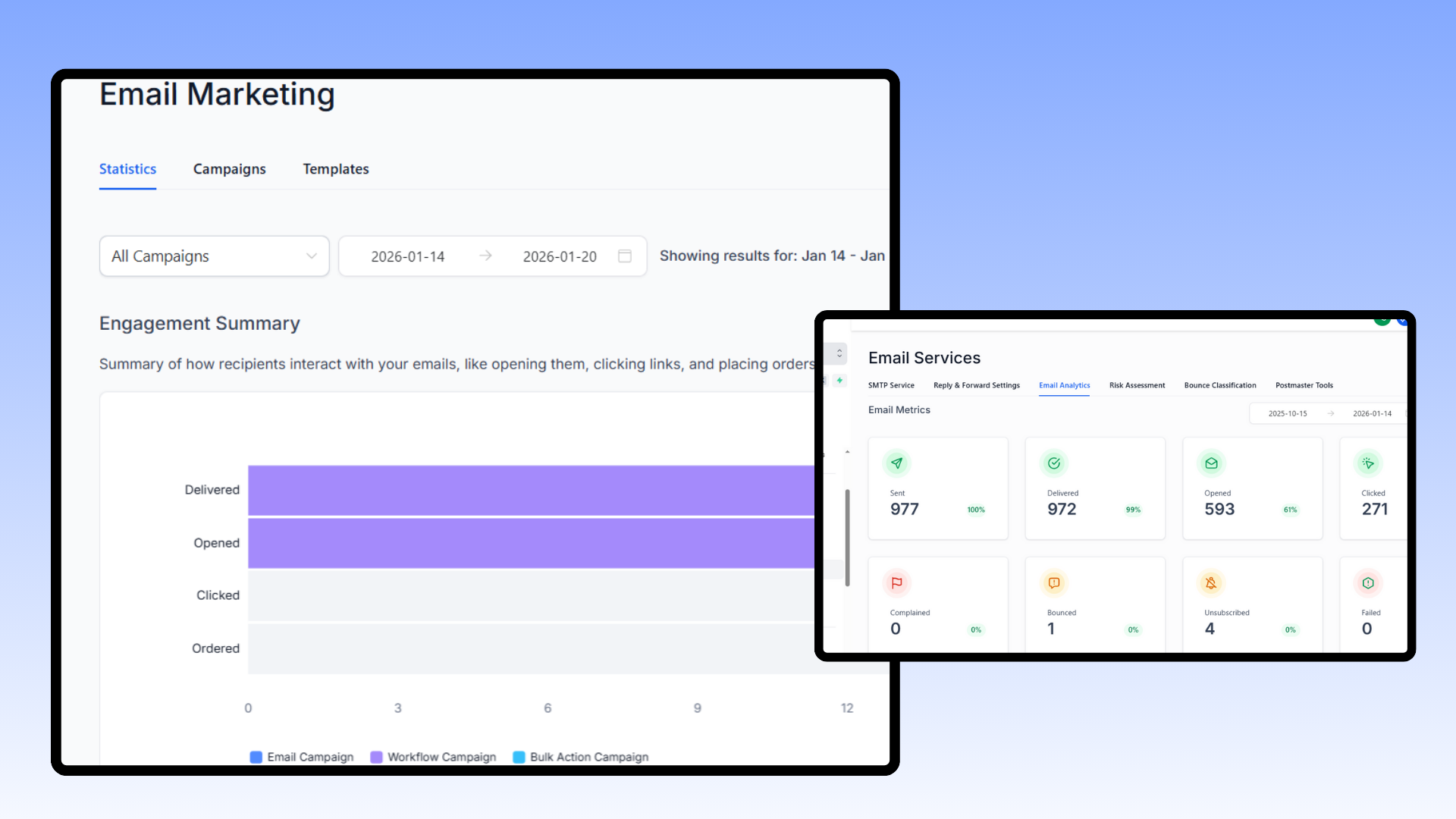
Decoding your email blast open rate is about getting the most from your e-mail marketing. Open rate measures how many people opened your email, and it can tell you a lot about your subject lines, timing, and how much your list trusts you. The average open rate for most industries is between 2.3% and 43.46%, but the figures vary widely based on your occupation.
For instance, non-profits average higher open rates, up to 52.38%, while e-commerce businesses tend to fall around 32.67%. It helps to see where you stand using a simple table:
By measuring your open rates against these benchmarks, you get a better idea of how your emails stack up. If your numbers are below the norm, it can be an indication that your subject lines or timing need improvement. For instance, messages sent between 9 and 11 a.m. In your contacts’ respective time zones open at a higher rate, so send more at those times.
Shorter subject lines, 20 to 40 characters, work best, with campaigns in this range being 45% more likely to get opened. Research suggests that people open emails that seem personal. If you used a real sender name instead of some generic company email, it would jump click-through by 14% and conversions by 10%.
Automated emails, like welcomes, order confirmations or even offers for refinancing outperform regular marketing blasts. These automated messages tap into buyer sentiment because they align with what buyers anticipate seeing based on their actions.
It’s important to track trends in your open rate over time. If you notice the rate dropping, it might mean your content is becoming stale or you’re sending emails too frequently. If they increase when you switch up your subject line style or send time, it means you’re heading in the right direction.
Watch your click-to-open rate (CTOR). A high CTOR means your message in the email matches what people thought they were opening. For example, education emails have a CTOR of 15.7 percent, whereas retail is at 5.8 percent.
Decode your e-blast open rate to segment your audience. For instance, you can send more follow-ups to people who opened but didn’t click or send a re-engagement email to people who haven’t opened in a while. Customizing your outreach this way makes your subsequent campaigns more resonant and increases the chances of getting seen in noisy inboxes.
Your CRM: The conversion engine

A CRM platform is more than a database. For small businesses, it’s the center that connects your outreach and follow up. Taking advantage of the features in your CRM can enable you to track, manage and move leads through your funnel while saving time and money.
With native features like email and ringless voicemail campaigns, automation tools, and analytics, your CRM becomes the engine behind higher open rates and conversions on every email blast.
Lead management
Segmenting leads based on how they engage with your emails is crucial for maintaining a clean and actionable pipeline. By utilizing email marketing metrics such as open rates and click rates, you can effectively segment contacts who consistently engage with your email marketing campaigns, ensuring that your most engaged prospects are never overlooked. Refinancing leads, for instance, can be tagged for immediate follow-up, allowing you to focus your efforts more efficiently.
A tagging system does more than just group people; it enables the creation of intelligent email lists for re-engagement campaigns, special offers, or educational content. Tracking email performance, including what emails a lead opens or which links they click, allows for tailored messaging that aligns with their interests, significantly boosting engagement rates and conversions.
This type of personalization can increase open rates by as much as 26 percent and conversions by up to 80 percent, showcasing the effectiveness of a well-structured email marketing strategy.
Automation power
Map out your user journey and define key touchpoints.
Establish workflow triggers such as new sign-ups or form submissions.
For example, prospects that click or open emails get a ringless voicemail drop follow-up
Draft email templates for each stage: welcome, educational, reminder, and special offer.
Set timing delays between messages for optimal engagement.
Test and refine sequences with A/B split tests
Use CRM platforms that support all these like NationwideLeads or GoHighLevel
Automated flows, like welcome series or refinancing using features to monitor mortgage rates, can convert at much higher rates than blasts, sometimes 2 to 3 times as much. You can add ringless voicemail drops to workflows to nudge leads who haven’t replied to email.
Automation accelerates, eliminates grunt work, and makes sure no lead falls between the cracks. You can monitor how each step performs with campaign analytics, tweaking timing or message style as necessary.
Ringless Voicemail Drop Automation
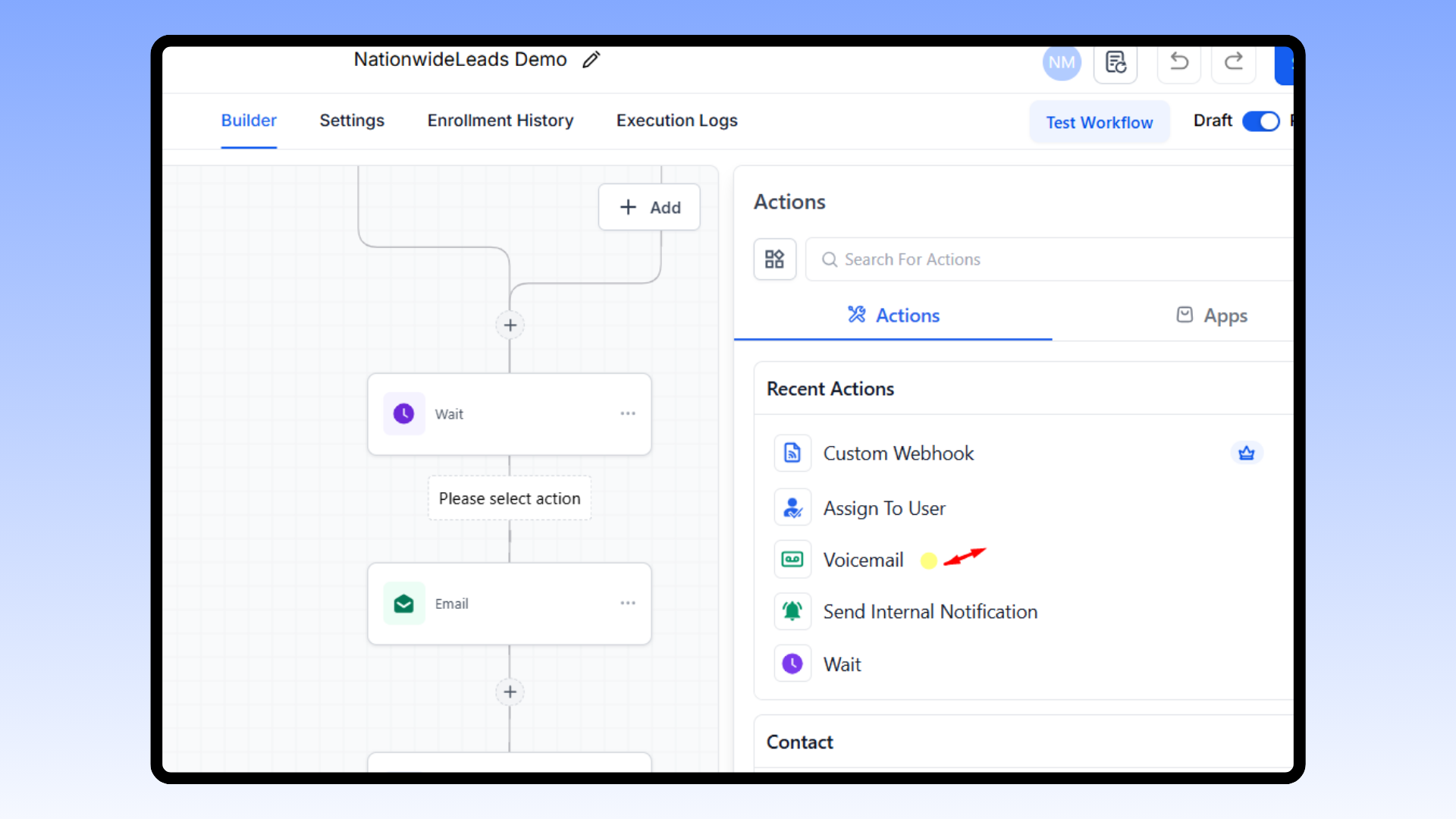
With CRM native features like ringless voicemail, for example, you send targeted voice drops straight to a lead’s mobile phone, with no live call necessary. It’s a good approach for time-dependent offers, reminders or warm follow-up to leads that open or click emails
Tools like NationwideLeads enable to build multi-channel and trigger based workflow like these. They even track response metrics from these voicemail drops so you know what’s resonating and what’s not. For instance voicemail messages, following clicks particularly when combined with information from CRM data, drives up outcomes
Response rates analysis allows you to try different scripts or delivery times. Sunday evenings, for example, beat weekday mornings. Pairing voicemail with email and SMS gives your campaign a multi-channel advantage that many don't have, with average conversion rates jump ranging from 200 to 500 percent across industries.
How to improve your email blast open rate
Boosting your email marketing performance requires a tactical, personalized approach. For small businesses and solopreneurs, each email marketing campaign matters. Maximizing your open rate means more eyeballs on your offers and a greater opportunity to expand your business. A few practical steps can make a big difference.
Use personalized sender names and subject lines for more trust and interest.
Scrub your list regularly to retain only genuine and engaged contacts.
For example, CRM Mortgage Rate Checker qualifies your leads better for refinancing
Experiment with send times to arrive in inboxes when readers are most engaged.
Segment your list so you can send the right message to the right group.
Mobile—three of four people will delete something that doesn’t look good on their phone.
Never blast emails to people who didn’t explicitly say it was OK.
Boost your results by resending campaigns to non-openers.
1. The subject line
The subject line is the gatekeeper. Almost half, 47 percent, of people will choose whether to read an email solely by its subject. Clear, snappy subject lines catch your reader’s attention immediately. Including urgency or exclusivity without spammy words such as “Offer ends soon” or “For our premier clients only,” can encourage additional opens without being aggressive.
Keep it short; long lines can get truncated, especially on mobile. Customizing the subject line, for example, “Hi Sam, your July report is ready,” increases open rates by up to 26 percent. Or what about A/B testing? Run a simple set of experiments, just two versions, to see which one garners the better results. What works for one group might tank with another, so keep experimenting.
2. The sender name
A familiar sender name establishes credibility. Forty-two percent of us check who sent an email before we open it. Choose a recognized sender name—either yours, your business, or a combination, such as “Sara at NationwideLeads.” Use that same name every time.
Test variations, such as just your first name, full name, or company name, to find out what gets the best response. If your position is significant, such as “Loan Officer – Alex,” that can assist in distinguishing you and appear professional.
3. The list quality
A healthy list equals higher open rates. Email folks who have explicitly opted to receive your messages. Double opt-in, where subscribers confirm their address, ensures that they truly desire your content.
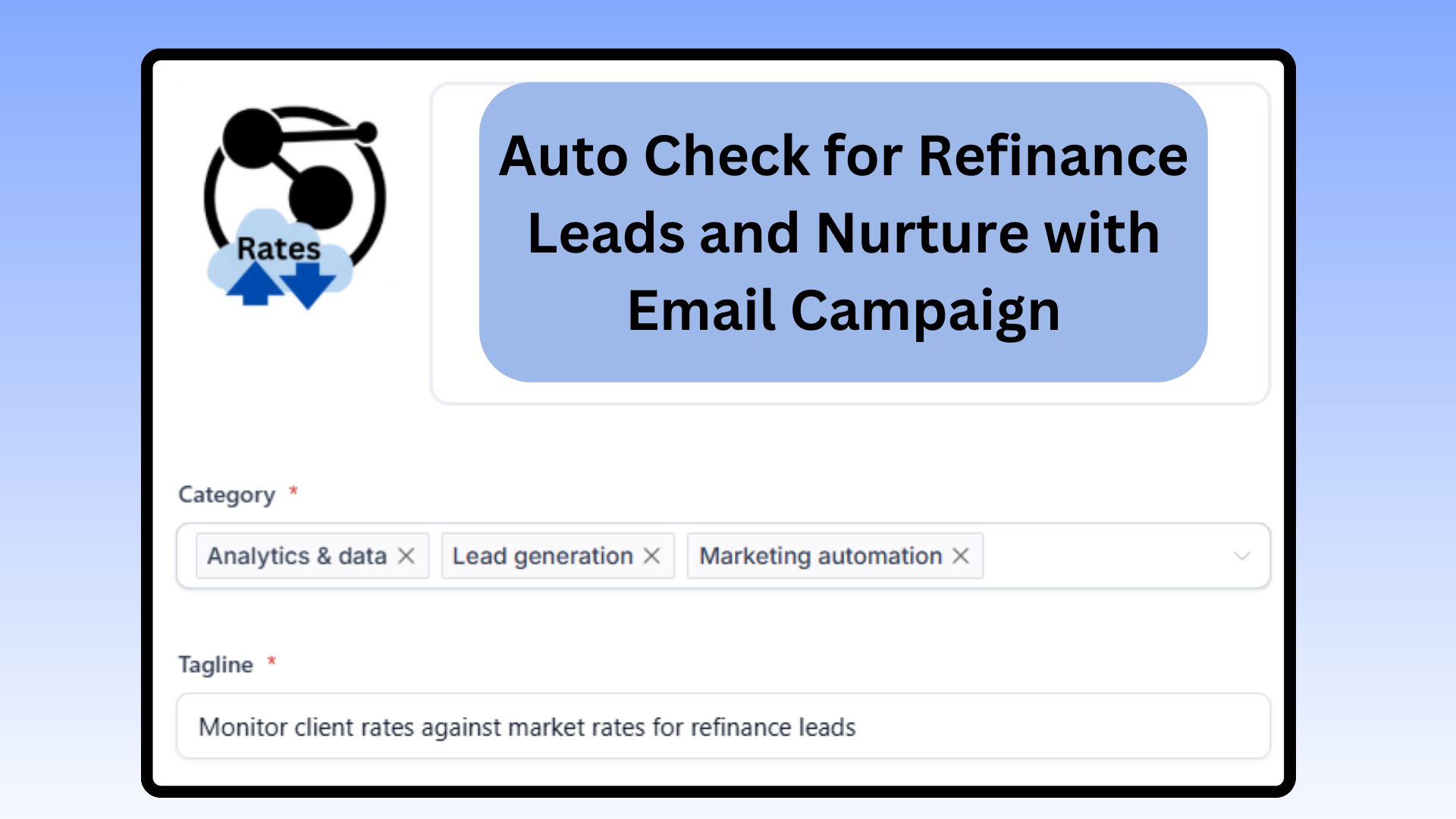
For a loan officer, platforms like NationwideLeads and GoHighLevel offer tools the auto monitor your email lists or contacts' mortgage rates against market rates and only add those to your campaigns that meet practical criteria for refinancing
Segment your list by interest, job title or where they are in the buying process. This allows you to deliver the appropriate message to each individual. Purge inactive subscribers regularly. Mailing to stale, old or dead addresses damages your stats and your sender reputation.
4. The send time
Timing counts. Examine previous campaigns for trends. Do your readers engage more in the morning or evening? Experiment with days of the week, days of the month, and so on.
Account for your audience’s time zones if your list is international. Platforms like NationwideLeads is a recommended CRM for an individual loan officer in this space as it enables you send emails using your business's or contact's time zone.
Of course, use your email platform’s analytics to experiment and hone your approach. Little adjustments inspired by actual statistics can accumulate to serious boosts.
5. The human element
Make each message personal. Use their name, say something appropriate and keep it personal. Share a quick success story or a happy customer’s comment to establish credibility.
Request feedback or a quick response. This turns your emails into a dialogue, not an announcement. When readers sense that you care, they are more apt to open your next message.
The psychology of the inbox

Your inbox is your own psychology, crafted by habits, confidence, and a desire for usefulness. Knowing how folks sift emails is crucial for increasing open rates and maintaining mindshare. For small businesses and solo founders, that means understanding what makes subscribers stop, click, or skip in their email marketing campaigns.
Email fatigue occurs when someone receives too many indistinguishable or unclear useful messages. Most users skim their inbox fast, dumping or filing away what doesn’t grab them in seconds. That’s why timing and relevance are so important in email marketing strategies. If you mail too often or at times when people are busy, your message disappears.
Some worldwide data demonstrates open rates increase in early evenings or weekends. The ideal solution is to test with your own email lists. Divide your audience and experiment with various sending times, then monitor the outcomes. This assists you in locating the sweet spot for your readers, wherever they are in the world.
Images factor into what gets opened as well. A clean layout, easy-to-read fonts, and tiny pictures that load quickly on cell phones maintain attention. The sender’s name is equally important. They open messages from names they recognize or trust. If you use your company name or your own real name, pair it with what your tribe knows you by elsewhere to improve email performance.
This establishes trust and makes your emails seem less like spam or immediately deleted, as most email from unknown senders is.
Subject lines are the meeting place of psychology and technical craftsmanship. We as humans enjoy closing the gaps, so subject lines that invoke curiosity have higher opens. For instance, posing a question or leaving a statement incomplete can generate curiosity.
Short subject lines, less than 50 characters, are best for mobile and do not get truncated. Reciprocity is another accelerator in successful email marketing. If your email offers something of value—advice, an offer, or a tool—people feel more inclined to open and do something about it.
In order for this to work, your call-to-action needs to be obvious and upfront. If the bottom line is buried, your reader might simply turn the page, leading to lower email metrics and diminished subscriber engagement.
Choosing the right loan officer CRM
Picking out a CRM for your mortgage biz is a great step toward better lead management, smoother client communication, and smarter marketing. Our recommended CRMs for an individual loan officer are NationwideLeads and GoHighLevel. Before you pick any CRM, first audit your existing workflow and start with free trial to ensure with covers what you need.
Identify what is working, what is a bottleneck, and what goals you want to achieve. Collaborate with your team because their daily exposure to leads, emails, and follow-ups will assist you in identifying gaps and essentials.
Pay special attention to CRM capabilities that assist with email and voicemail integration. You’d like a tool that allows you to send blasts, set up drip campaigns, and log voicemails all in one place. This simplifies keeping tabs on each touchpoint with a lead or client.
For instance, certain solutions auto-log when you email a prospect, so you don’t lose touch with previous conversations. Others allow you to use triggers like open and click to leave pre-recorded voicemails drops for a batch of leads, making your outreach feel more personal without consuming your day. A strong CRM, for example like NationwideLeads, allows you to establish templates and schedule emails, which accelerates mundane activities.
These features enable loan officers to keep pace with large lead volumes and make certain that no one falls through the cracks. A clean, simple interface is important to busy loan teams. Seek dashboards that bring leads, tasks, and client info front and center.
Simple drag-and-drop lead boards, instant search, and one-click actions keep your daily work flowing. Systems with custom fields for loan-specific info, tagging, and lead scoring help you filter and locate important clients more swiftly.
Some offer features that allow you to monitor contact rates against market rates for refinancing qualifications. You want a loan officer CRM that allows you to enter data with the minimum amount of clicks.
This reduces errors and frees up your team to focus on closing deals. Examine the CRM’s analytics to track your email campaigns. They require real-time stats on open and click rates, responses, and more. Best systems segment this by campaign, by time, and even by user.
This allows you to observe which messages receive the most attention, enabling you to adjust your outreach and determine the optimal times to send blasts. Tagging, categorization, and lead scoring features make it easier to target the right leads for each campaign, increasing your open rates and follow-up success.
Consider growth as well. Don’t fall for the bottom plan. Find a CRM that can scale without cost more like adding seats, storage, contacts, workflows and even landing pages as you need them.
Emphasize robust security with data encryption, in addition to compliance with data privacy regulations such as GLBA. This protects your clients’ sensitive financial information and keeps your business out of hot water.
Metrics beyond the open

Open rates are just the beginning of measuring email blasts. Small business owners and solopreneurs require a broader perspective to truly evaluate their campaign’s effectiveness. Other numbers to watch help explain what happens after someone opens an email.
These metrics, click rates, unsubscribe rates, and conversion rates, tell you more about your audience’s interest and if your message works.
Click rates represent the percentage of individuals who both opened and clicked on a link. If your click rate is 2.09%, it indicates that out of 1,000 people, approximately 21 clicked through. It’s tiny, but if those clicks are from the right folks, they can mean a lot.
The click-to-open rate (CTOR) goes a little further. It considers how many people who open your email are so interested that they click. Manufacturing leads with the highest CTOR, which means that individuals in this sector are most responsive to emails. CTOR varies a lot by industry, so always check how your numbers stack up against your own sector.
Unsubscribe rates are just as important. If folks continue to leave your list, there is potentially something wrong with your message or frequency. Sometimes it’s because the content is too difficult or not what people anticipate. Readability and length factor in heavily.
If your emails are too long or difficult to access, folks will tune you out or unsubscribe. You can look up reading scores to determine if your content is easy enough for the average reader. An email that was opened but looked at for a second or two is practically the same as having ignored it. Monitoring these ‘unread’ opens assists you in optimizing your copy.
Conversion’s the true gauge of your email. You want to know how many people actually do what you asked—buy, sign up or reply. This is where your campaign’s worth shines. High conversion indicates that your message and timing resonate with your readers.
If not, you should probably switch up your call to action or clarify your offer. Bounce rates are a health check for your email list. A high bounce rate means that lots of your emails aren’t getting through, possibly due to bad addresses or spam filters.
Maintain a clean list and monitor your delivery statistics. Your distribution lists are important too. Sending to the right people increases your odds of being noticed and getting a response, particularly for in-house emails or targeted lists.
Conclusion
To pump up your email blast open rate, minor adjustments have big rewards. Experiment with short, interesting sounding subject lines. Clean up your list every once in a while or use tools that do for you automatically like auto monitoring your contacts' mortgage rates against market rates for refinancing qualification. Grab a CRM like NationwideLeads that is easy and cheap, but the content is still strong on features. Stir in convivial sender names, not some strange brand-only one.
Follow the appropriate metrics. Don’t simply fixate on open rate or clicks but look at CRM tools like ringless voicemail drops to drive up conversion once they open. A small variation, such as sending at lunch or in the evening, can increase results substantially. Want to make your numbers leap? Try this CRM free or book a chat. Receive smart advice, speedy assistance with free onboarding or even practical solutions with done for you services tailored to your venture.
Frequently Asked Questions
What is an email blast open rate?
An email blast open rate is a crucial email marketing metric, representing the percentage of recipients who open your mass email. It gauges first contact and provides valuable insights into the effectiveness of your subject lines and delivery tactics.
Why does my open rate matter for email marketing?
A better open rate, as indicated by recent email marketing benchmarks, means more people visit your message, enhancing your CTRs and conversion.
How can a CRM improve my email blast open rate?
A good CRM helps you personalize email content and segment email lists, resulting in more focused emails that can enhance email marketing benchmarks and improve email blast open rates.
What affects the psychology of opening emails?
Subject lines, who it’s from, and when it was sent all impact email performance, influencing whether recipients open it. Personalization and value are key for successful email marketing.
How do I choose the right loan officer CRM for better open rates?
Seek a CRM that provides automation, personalization, and in-depth analytics, including loan officer features like auto monitoring of contacts against market rates for refinancing or ringless voicemail drop to close leads faster that open and click emails
Are open rates enough to measure email campaign success?
No, open rates are just a statistic; successful email marketing requires measuring click-throughs, conversions, and overall email engagement for the full story. Learn how to use CRM as loan officer for email and ringless voicemail refinancing
What are some ways to improve email blast open rates?
Charge interesting subject lines, segment your email lists, customize messages, and send at the best times to enhance email performance.