
Affordable CRM software for real estate agents: 10 tools to close deals better
Content marketing for realtors means using Google business profile, blogs, videos, and social posts to reach buyers and sellers. Good content keeps real estate agents in front of people, sharing tips and building trust.
With an affordable CRM software for real estate agents to schedule smart posts, capture reviews and share guides, agents can demonstrate local expertise, address common home buying questions, and differentiate themselves from the competition.
To illustrate how realtors using content right, this posts provides easy steps and real-life examples that work to help close deals better with these CRM tools
Key Takeaways
Through thoughtful content marketing, realtors can build trust, demonstrate expertise, and connect authentically with potential clients across the globe.
Working with local flavors, telling real stories, and taking advantage of video will differentiate you and humanize your brand to a worldwide audience.
Leveraging CRM and automation tools helps you streamline lead capture, follow-ups, request reviews and client interactions. This enables more efficient and personalized communication.
By posting consistently especially on Google Business Profile and providing action-oriented CTAs, you keep people engaged and successfully lead them down the path toward interaction.
Leverage data and audience feedback to hone your strategy, gauge success, and ensure your content provides value across markets.
Repurpose your content and reviews into different formats and sharing it on multiple platforms, to extend your reach and guarantee that your marketing message strikes a chord universally
Table of Contents
Why content marketing for realtors works
Close deals better with these CRM tools
The authentic realtor's playbook
What is content marketing for realtors?
Why is content marketing important for real estate professionals?
How can realtors create an effective content marketing engine?
What CRM tools can help realtors close deals better?
What are common content pitfalls for realtors?
Why content marketing for realtors works

Content marketing helps realtors reach people before they even start thinking about making a move. By implementing a real estate content marketing strategy, realtors can share valuable articles, videos, and review to remain top of mind, even if clients buy or sell just once every 7 years.
Content isn’t just about showing houses; it’s about cultivating trust, sharing expertise, and connecting authentically in a way that paid impressions or old-school marketing can’t.
With a strong focus on engaging content, realtors can select and target their desired audience, whether it be first-time buyers, investors, or sellers of luxury properties, ensuring that their real estate marketing efforts are effective and diverse.
1. Build trust
Trust begins when you provide transparent, helpful answers to real estate questions. When real estate agents publish in-depth blogs, tips on Google business profile or informative videos about the buying or selling process, it demystifies the process and shows they’re committed to helping clients, not just making a sale.
Sharing client success stories, before and after photos, or testimonials adds credibility to your real estate content marketing strategy. This builds confidence for those who don’t know where to begin. Engaging with questions and comments, even online, shows that you’re listening and value client feedback. Over time, this transforms strangers into loyal followers.
2. Showcase expertise
Whether it’s writing about local market trends or explaining new housing rules, a well-crafted real estate content marketing strategy helps realtors differentiate themselves as the ‘go-to’ expert. In-depth pieces on topics such as pricing strategies or investment tips demonstrate your expertise in the real estate market.
Webinars or live Q&As allow you to connect in real time and establish authority. Infographics explain hard truths, like mortgage processes or home inspection checklists, making them digestible for potential buyers.
By employing case studies to illustrate how you responded to difficult situations, you prove you’re more than just theory.
3. Create connections
Social media is a place to ignite real conversations, not just list property listings. Whether it is joining discussions or sharing local event experiences, real estate agents become part of the community.
Collaborating with mortgage brokers, inspectors, or even local stores expands your reach and opens up new opportunities for your real estate marketing strategy. Requesting feedback or launching polls encourages clients to express their opinions, making them feel acknowledged and heard.
This sort of transparent, continuous engagement nurtures a genuine feeling of community that transcends the one-time deal.
4. Generate leads
By providing free content such as home buyer guides or checklists, real estate agents can easily grow an email list and attract interested prospects. By making some of their content targeted for investors and first-time buyers, realtors naturally attract the right buyers.
Embedding forms and lead magnets in blog content or landing pages transforms casual browsers into leads. By tuning your real estate content strategy for search, you make your counsel visible when typical buyers seek solutions, attracting free organic traffic without the need to buy ads.
5. Nurture relationships
Once you’ve made contact, a brief, personal note by email can continue the conversation. Monthly newsletters featuring engaging content or news keep clients involved and informed. Nothing too fancy, just a nice little loyalty program or small thank-you gift for repeat clients that inspires them to return and bring friends.
By sharing real estate content specific to what each client requires, such as renovation advice for new homeowners, you demonstrate that you recall and appreciate not just the transaction, but their future success.
Your content marketing engine

A successful real estate content marketing strategy for realtors requires a comprehensive plan that aligns with the business's primary objectives. It’s about more than selling homes; consider trust, network expansion, and becoming a resource.
Pinpoint who your audience is: are they first-time buyers, renters, or luxury investors? Each group requires a unique style, tone, and kind of information. Set achievable, quantifiable objectives, such as increasing your email list by 10% within three months or boosting your real estate website traffic. When you have these numbers, it provides the means to see if your work pays off. Monitor your results and then adjust your plan as you go.
Invest your time and money such that you can maintain your schedule for at least six months. Consistency is more important than doing a ton and then falling silent.
The content
To enhance your real estate content marketing strategy, use an all-in-one affordable CRM software for real estate agents like NationwideLeads to provide variety in content types—blogs, videos, podcasts, micro social posts, Google profile and newsletters.
This approach helps you reach more people because not everyone prefers long posts or lengthy videos. Share engaging content such as home buying tips, market updates, or walk-through videos of new property listings. Address common questions to build trust and save time for both you and your audience.
Downloadable guides or checklists, like 'How To Sell Your Home,' can be gated to capture leads. Whatever you do, tie your content to what your audience cares about—local market trends and financing tips—while maintaining an affable yet crisp voice.
The calendar
A content calendar is your best friend for keeping your real estate content marketing strategy on track. It plans what you’ll publish, where, and when. Mark significant dates—major holidays or local events that could be tie-ins for your content, such as ‘Best Home Staging Hacks Before Spring Festival’ or ‘What to Understand About Relocating During School Breaks’.
Don’t just set it and forget it; review how your posts do and tweak your planning. Leverage marketing tools to post in advance so you can concentrate on your clients, not just your blog.
The software
Choose a CRM that matches your budget while assisting in logging leads and follow-ups, essential for any real estate business. Even solo agents and small teams can discover sensible systems that enhance their real estate content marketing strategy.
Consider lightweight dashboards and features for your real estate website, social media and newsletter email. A platform with CMS features such as WordPress helps keep your posts organized and easy to update.
For example, a platform like NationwideLeads enables you to sync in analytics tools like Google Analytics with built-in CRM reports to show what works in your real estate marketing efforts, allowing you to focus on strategies that yield results.
Close deals better with these CRM tools
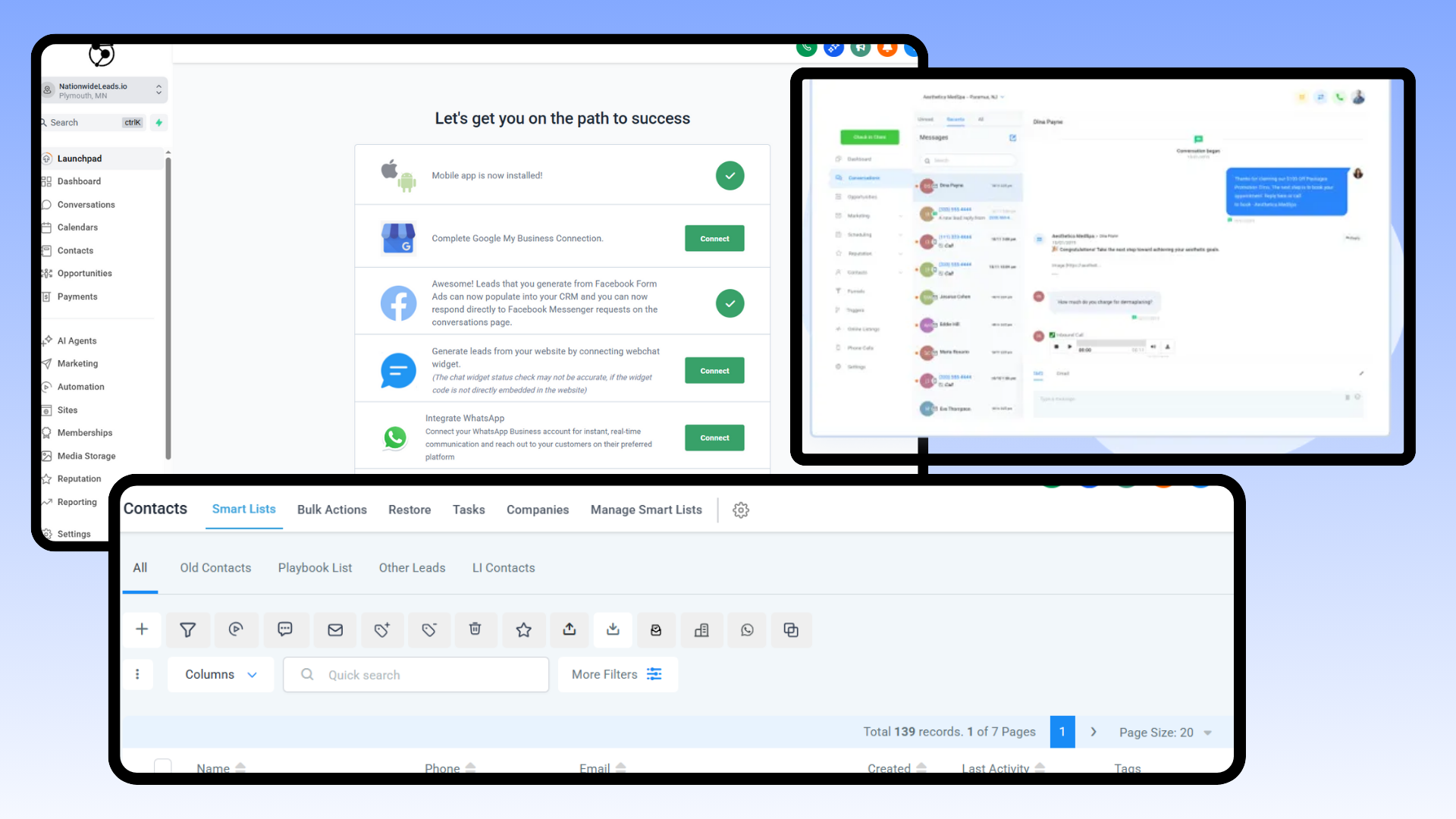
CRMs are at the heart of a successful real estate content marketing strategy for realtors who aim to build trust and close deals with less friction. Today’s CRM tools do more than just store contacts; they enable agents to sort and prioritize leads, manage every step of the sales pipeline, and have communication channels as well as providing AI-powered assistance.
For example, you can now use AI to respond your reviews on Google business profile effortlessly or engage users on social media. An AI employee can also answer your calls to help you do initially screening before forwarding it one
This allows agents to focus on real conversations and real opportunities. Customizable CRMs allow modifications to dashboards, sales stages, and notifications to match your workflow. With features like unified inboxes and workflow automation, CRMs like NationwideLeads enhance your real estate marketing efforts, helping you work faster and smarter.
Capture leads
To scale your real estate business effectively, start with a reliable lead capture strategy. Utilizing CRM tools, web forms, and landing pages integrated into your CRM allows you to gather visitor info seamlessly. You can set up custom fields to collect only what you need.
Offering free consultations or home valuation reports can serve as an incentive, encouraging sign-ups and expanding your list. Track where your leads originate, whether through social media content, email marketing, or paid ads, to identify which channels convert best.
Additionally, chatbots or AI employees can engage potential buyers and capture info even when you’re away, transforming your real estate website into a 24/7 salesperson.
Automate follow-ups
By automating follow-ups as part of your real estate content marketing strategy, fewer leads slip through the cracks. Configure email marketing campaigns that deliver property recommendations or market advice for days or weeks, warming up clients who may not be immediately ready but need to consider the decision.
Use ringless voicemail drop to increase personal touch with voice especially when looking to convert or close a deal. Your CRM can help you capture all responses and schedule personalized follow-up calls and reminders.
With complete pipeline management, you will know at a glance who needs a nudge and who is ready to show. Personalize each message by pulling in details from the client’s profile, such as their preferred neighborhoods or budget. Automation frees your time for high-value chats.
Track interactions
CRMs make it simple to log each call, text, email, and meeting with clients, which is essential for a successful real estate content marketing strategy. Take advantage of the unified inbox and built-in texting to keep it all in one place and never miss a message. Log notes after each meeting to stay context fresh.
Review history to find what topics resonate with each client; perhaps one discusses school districts while another talks about commute times. Use this data to better tune your pitch or real estate marketing ideas for upcoming discussions. AI-powered tools can even summarize client calls or flag urgent follow-ups, keeping you organized with less effort.
Measure results
Set your KPIs early, including lead capture rate, email open rate, and conversion rate, and track them with CRM analytics. By analyzing your real estate content marketing strategy, you can see reports on content engagement, helping you understand what resonates and what needs work. This data allows you to better tune your campaigns and improve your real estate marketing efforts every cycle.
The authentic realtor's playbook

Great real estate content marketing strategy for realtors begins with reality. In an industry filled with noise, trust is your differentiator. Nail your target client; perhaps it’s a first-time buyer who wants the process broken down into obvious steps or an investor requesting facts and figures.
Customize everything for their needs. Speak in your real voice and maintain your message consistently from your real estate website to social media. Consistency breeds trust and at the same time makes you memorable.
Local stories
Shine a spotlight on your neighborhood by discussing local shops, parks, and events. It’s more than just real estate; it’s about demonstrating that you understand the neighborhood and care for it. Share short anecdotes about neighbors, new businesses, or what’s fun in the area. These tales assist potential buyers in envisioning life within its walls. Post easy trends such as how many families move in each year or what’s happening at local schools. When you promote the nice, real part of the neighborhood, you become the local expert in your real estate marketing strategy. Tell us a tale about assisting a family in getting settled or how a community event changed things. This humanizes your job and location.
Property history
Each home has a story that goes beyond just square meters and price. As part of your real estate content marketing strategy, tell them who built it, how it evolved, and why it truly matters. If a home was renovated, discuss the transformation and what it offers for potential buyers. Narrate anecdotes, like a guy flipping an old house with green enhancements. Describe market shifts and explain why an area is currently hot or how prices have fluctuated with actual statistics. This approach not only provides clients with a sense of timing and worth but also enhances your real estate marketing efforts.
Client journeys
Nothing builds trust as well as real client stories in your real estate marketing strategy. Post how you assisted a young couple purchase their first home or a retiree sell a family house for the next phase in life. Highlight problems, how you repaired them, and what the client experienced. Short, pithy testimonials with clients’ own words are powerful. Include deep dive case studies that take you through the entire journey, detailing what worked, what was difficult, and what the result was. These stories inspire future clients and enhance your real estate content marketing strategy.
Video presence
Bite-sized, authentic videos are a key component of a successful real estate content marketing strategy. Give a home tour, take a stroll through the neighborhood, or just answer FAQs. Live streams allow you to engage with viewers and reply in real-time, fostering trust. Sprinkle in regular market updates or 'behind the scenes' clips to keep your feed fresh and real. Make sure you always caption, title, and tag videos properly so that people can find them. A flow of useful videos, queued in advance, sets you apart in the competitive real estate market. Combine video with offline tools such as direct mail for greater coverage.
Common content pitfalls

Content marketing for realtors can be challenging, often leading to wasted time and budget. Many agents fall for the myth that having the best real estate content always wins. Instead, a solid real estate content marketing strategy focuses on understanding your audience, planning effectively, and continuous improvement. While many start strong by exercising good sense, they often stumble over simple fundamentals, relying on platitudes and haphazard sharing without effective CTAs or analytics.
Generic advice
New agents often rely on outdated templates or spam emails that lack relevance to their audience. Instead of generic messages, focus on a tailored real estate content marketing strategy that addresses real client pain points, such as financing hurdles or local market trends. Aim to provide insights that resonate with specific groups like first-time buyers, investors, or families.
Avoid clichés and share actionable advice, such as tips for staging a home or evaluating a neighborhood. By telling stories from your own real estate business experiences, including successes and failures, you establish trust and set yourself apart from agents who stick to scripted content.
Inconsistent posting
Blogging and content are hard to get right in the real estate market, particularly early on. Most agents post in fits and starts and then disappear, which frustrates your readers and muddles your real estate brand. Common pitfalls in a real estate content marketing strategy include choosing a posting frequency you can sustain, even if it’s just one quality article a week.
Scheduling tools can assist in automating posts across channels, so you don’t have to be online 24/7. See when your audience is online the most, such as early morning, late at night, or weekends, and post closer to those times. Consistency establishes authority and maintains your brand presence.
Use done for you help especially if are busy and don't have the time to stay consistent. Platforms like NationwideLeads offer done for you services as any time in your growth journey. You can mix things up and use them cost-effectively while still maintaining control of your content
No call to action
Content without a clear call-to-action (CTA) will almost never lead to conversions in your real estate marketing strategy. Always specify what you want readers to do next — whether it’s to “schedule a viewing,” “download a neighborhood guide,” or “subscribe for updates.” Craft engaging real estate content that encourages action without being overly aggressive.
Experimenting with CTAs in various locations — at the conclusion, halfway through, or as pop-ups — can help you determine what receives the highest audience engagement. The right CTA can convert a reader into a client or at least progress them down the sales funnel. Without it, even great real estate marketing content falls flat.
Ignoring data
Too many agents overlook analytics, missing critical insights for their real estate content marketing strategy. Regularly review which posts receive the most visits, shares, or comments, and apply these trends to your marketing efforts. Double down on successful real estate content and drop what doesn’t work.
Track audience engagement: Are they reading to the end, clicking links, or bouncing? Adjust your topics and posting times based on this feedback. Set clear goals for each post, like capturing emails or booking calls, and track the outcomes. Remember, content marketing isn't 'set and forget'; it's an iterative learning process.
Beyond content creation

Creating engaging real estate content is just the starting point for realtors. To truly impact the real estate market, your content marketing strategy must include recycling and distributing content through appropriate channels, sparking genuine discussions, and monitoring outcomes. Every action, from refining a blog post to engaging with comments, shapes your audience's perception and the effectiveness of your real estate marketing efforts.
Repurpose
Blog posts can be transformed into engaging real estate marketing videos or podcasts, especially given the growing demand for virtual property tours. A comprehensive article on neighborhood trends can easily convert into a quick slideshow or podcast episode, appealing to those who prefer visual or auditory content.
Data-heavy posts, like market reports, can be turned into visually appealing infographics, making the information more digestible and capturing even the shortest attention spans. Refreshing old posts with updated market data not only keeps your real estate website current but also enhances its ranking through long-tail keywords, which are essential for visibility. Bundling related posts into guides or eBooks can further establish you as a trusted local authority.
Distribute
Getting your real estate content seen involves more than merely posting on your site. Instagram is excellent for quick updates with Stories that expire within 24 hours, keeping followers informed about open houses. Email marketing remains a powerful channel to deliver property listings and guides directly to inboxes, allowing you to showcase your real estate marketing strategy effectively.
For luxury markets, LinkedIn Articles are ideal for sharing deeper insights and connecting with an audience that has greater purchasing power. Collaborating with local influencers can attract attention from new, engaged audiences, while addressing questions in online forums enhances credibility within niche communities.
Engage
Responding promptly to comments or messages makes users feel appreciated and extends the discussion, which is crucial for your real estate content marketing strategy. Questions in your posts, such as what do homebuyers look for most in a home, encourage comments and increase engagement.
You can run little contests or giveaways, like gift cards for sharing a property listing, to build buzz. Polls or surveys on your real estate website or social channels gather valuable feedback and help you understand what your audience wants, enhancing your next marketing efforts.
Analyze
Keep an eye on your real estate content marketing strategy by monitoring content performance with analytics tools to track views, shares, conversions, and traffic sources. If virtual tours receive more clicks than property listings, focus on creating more engaging content.
When Instagram Stories generate more visits than TikTok, allocate your time and budget accordingly. Consistency matters in your real estate marketing efforts, so commit to a schedule you can maintain, using your own data to refine your strategies continually.
Conclusion
Content marketing allows realtors to demonstrate genuine value and not just listings. It reaches buyers seeking something more than a sales pitch. Quality content establishes trust quickly. A clever combination of blogs, video tours, Google profile and client experiences is ideal. Don’t be afraid to use your own voice and real stories from your day-to-day. Avoid the gobbledygook. Give buyers and sellers some helpful tips now. Utilize an affordable CRM software for real estate agents like NationwideLeads to generate new leads, maintain your follow-up efforts and retain clients with the help of automation and AI. Try it for free or get free onboarding if you need assistance configuring content or selecting the appropriate tools for your objectives.
Frequently Asked Questions
What is content marketing for realtors?
A real estate content marketing strategy leverages valuable content, such as blogs, videos, and guides, to attract, engage, and educate prospective buyers and sellers, establishing trust and authority in the real estate market.
Why is content marketing important for real estate professionals?
For realtors, a strong real estate content marketing strategy allows you to reach audiences beyond your normal channels, nurture leads, and build credibility. It assists homebuyers in making informed choices, resulting in more prosperous transactions and lasting relationships.
How can realtors create an effective content marketing engine?
Realtors need to implement a real estate content marketing strategy by strategizing topics, leveraging various formats such as articles and videos, and posting consistently. Measuring results and refreshing content helps maximize your investment and keep your readers engaged.
What CRM tools can help realtors close deals better?
An affordable CRM software for real estate agents such as NationwideLeads assist real estate agents in managing leads and automating follow-ups, enhancing the real estate marketing strategy to monitor client interactions and close more deals efficiently.
What are common content pitfalls for realtors?
Typical mistakes in real estate marketing include writing sporadically and disregarding reader interests. To avoid these, real estate agents can get done for you help to create useful, topical, and genuine content.
How can realtors go beyond content creation?
Realtors can enhance their real estate content marketing strategy by reusing blog content, social media posts, and newsletters to amplify reach and foster client connections.
How does authentic content benefit realtors?
Genuine real estate content establishes credibility and demonstrates knowledge, making agents a beacon for clients in a sea of sameness.