
5 Best Workflow Automation Management Software for Loan Officers
Workflow automation management software lets small businesses set up, track, and repair daily tasks in a single tool. Powered by workflow automation management software, owners and teams save time, reduce errors, and keep work flowing swiftly.
Choosing a good fit translates into simpler setups, lower cost, and fewer headaches for folks who want less tech hassle and more output. To demonstrate how workflow software works its magic best, the following sections dissect features and effective ways to use them.
Key Takeaways
By automating repetitive work in loan officer workflows, loan officers save time, reduce errors, and increase overall productivity, providing value to their teams and borrowers alike.
Implementing workflow automation management software standardizes lead management, borrower communication, document handling, milestone updates, and post-close engagement.
Choosing the right automation tool involves evaluating options based on factors such as integration abilities, ease of use, and scalability to suit your business's evolving requirements.
Seamless integration with loan origination software keeps data consistent and operations flowing through all phases of the lending process.
Automation delights borrowers with timely updates, personalized communication, and better service overall.
Consistently tracking automation results with KPIs and input keeps driving progress and business relevance.
Table of Contents
The daily grind of manual tasks
How to automate loan officer workflows
Selecting your workflow automation management software
Integrating your loan origination software
Measuring your automation success
What is workflow automation management software?
How does automation benefit loan officers?
What features should I look for in workflow automation management software?
Can workflow automation integrate with loan origination software?
Does automation only improve efficiency?
How do I measure the success of workflow automation?
Is workflow automation management software suitable for small teams?
The daily grind of manual tasks
Manual work fills much of the workday for small business owners, loan officers, and staff in growing companies. Most of it is rote, copying data from one place to another, updating spreadsheets, and chasing emails to set up a meeting. These tasks can feel endless, especially without a robust workflow management tool in place.
For loan officers, every day brings the same cycle: inputting borrower details, updating CRM records, sending out follow-up reminders, and scheduling calls. Each action pulls time away from what really matters, building trust with clients, reviewing applications, or closing loans. This repetitive task management leads to burnout and inefficiency.
The effect of this grind cuts deeper than wasted hours. Teams are exhausted and uninspired from the drudgery of never-ending manual workflows. When a system involves retyping addresses, hunting for attachments, or copying numbers into forms, errors will inevitably occur, highlighting the need for effective workflow automation software.
Even minor mistakes such as a client’s name being mistyped on a document or a missed appointment can cause lost revenue and decreased borrower satisfaction. As teams grow, the fissures deepen. A process that worked for two folks promptly breaks when scaled up to ten. Work accumulates, minutiae slips, and the team threatens to burn out, making collaboration more challenging.
Automation addresses these headaches front and center. By outsourcing data entry, appointment scheduling, or email reminders to software solutions, organizations minimize back-and-forth, decrease response times, and reduce errors. This powerful workflow solution can transform how teams operate.
For instance, rather than follow up five emails to discover a meeting time, an automated calendar tool allows clients to choose from open slots immediately. Data entry tools sync information between systems, so employees do not need to copy and paste from spreadsheets into CRMs or email templates. The result is less busywork, more time for real conversations with clients, and far fewer errors.
Typical grunt work is perfectly positioned for this sort of transformation. Scheduling meetings and sending reminders, updating client records and routing approvals, tracking progress — these are all processes that can move from manual to automated workflows, enhancing task tracking and project management.
For a small company hopping between phone calls, email chains, and spreadsheet updates, automation smooths things out. Owners get visibility into their pipeline, teams save on rework, and clients enjoy quicker, more accurate responses, ultimately improving overall productivity.
How to automate loan officer workflows

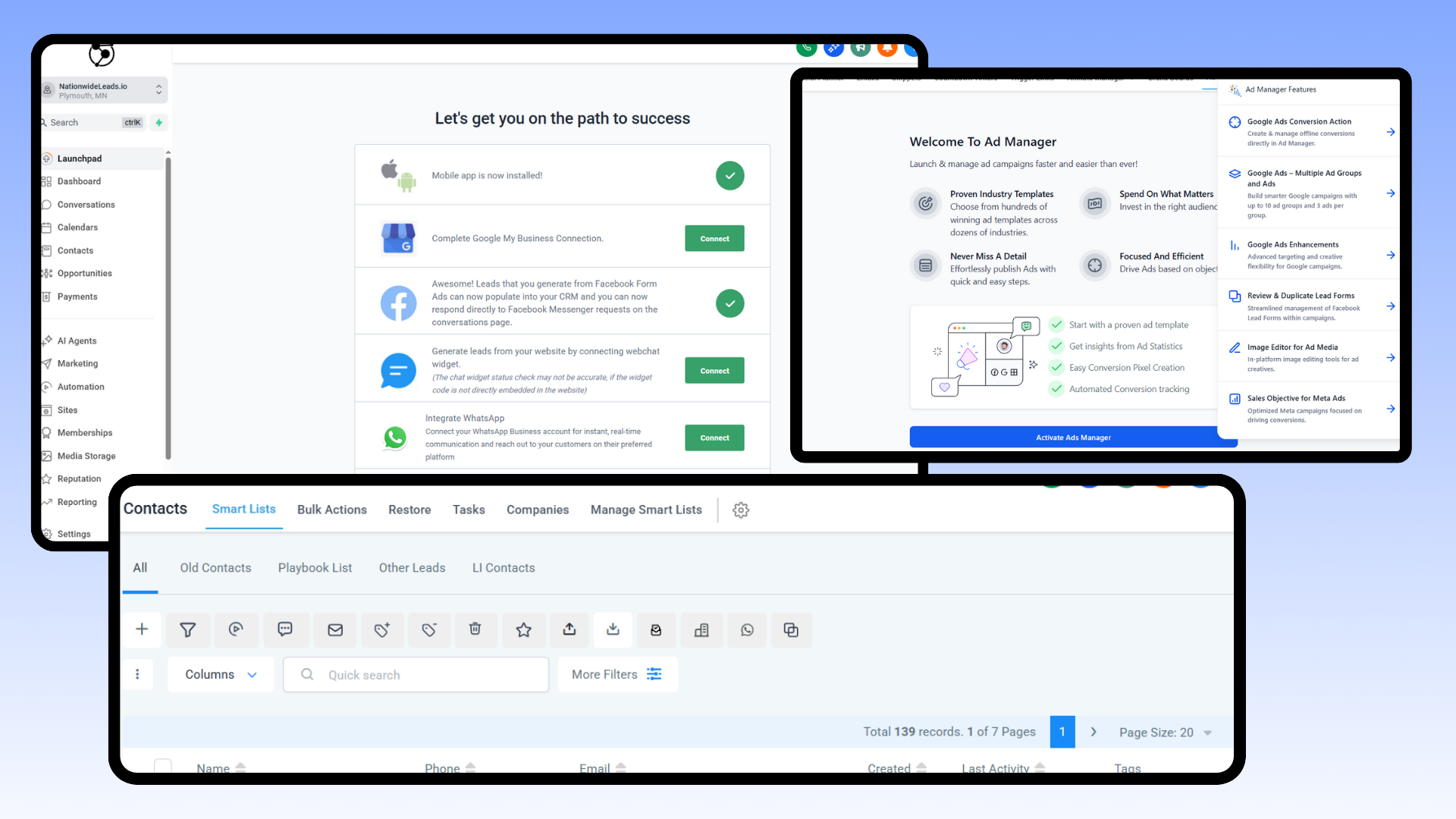
NationwideLeads for loan officer workflows automates loan officer workflows with amazing results: faster response times, reduced errors and a smoother lending experience for staff and borrowers. With workflow automation management software, lenders can reduce loan approval times from days to hours, reduce their risks and improve the customer experience.
The real trick is to understand your existing processes, identify the bottlenecks and reimagine how to accomplish the tasks. Workflow automation tools let you map, change and track every step, ensuring you can fix problems as regulations or borrower needs shift. Here’s how you can start:
Map current workflows and spot bottlenecks and gaps.
Prioritize tasks that cause the most delays or errors.
Select a loan officer workflow automation platform with robust cloud encryption security.
Construct flows to handle steps in parallel for faster approval.
Review and optimize workflows frequently as rules and technology change.
1. Lead management
Automating lead management ensures every potential borrower receives attention when it matters most. Build loan officer workflows from lead intake to funding. Use CRM to pull in leads from all channels, including web forms, calls, and chatbots, then auto-assign them to loan officers immediately.
Leads are triaged by needs and action proximity so that no one falls through the cracks. Remind you to follow up and alert you when a lead hits a milestone. You can customize automated workflows that display daily tasks for each team member, ensuring everyone knows what to do next.
With integrated reporting, you track conversion rates and find out what sources and steps are most effective.
2. Borrower communication
One shared inbox for all messages lets your team monitor every borrower dialogue. Automate sending updates. You can send updates about application status, missing documents, or next steps, all triggered by workflow events.
SMS and email templates help you keep borrowers in the know. Each message can be customized by loan type or stage. Automation makes it easy to contact borrowers on their favorite channels and at exactly the right time.
These steps assist in maintaining transparent communication, reduce communication gaps, and enhance a trustworthy borrower experience.
3. Document requests
Document collection is frequently a bottleneck in loan processing. These automated requests mean your system shoots out reminders and instructions the moment a file is required. Templates save time and keep messaging consistent.
Track what has been received and what is missing, updating dashboards so loan officers can spot delays quickly. Through a secure portal in the LOS, borrowers upload files whenever they want, with encryption and access controls safeguarding sensitive information.
This helps prevent lost documents and keeps everything in one spot for review.
4. Milestone updates
Automatically notify borrowers of critical moments like pre-approval, final review, or funding. These alerts are triggered by workflow changes, so borrowers receive timely updates without any manual work from your team.
Milestone tracking provides your team members with a transparent view of every loan’s status. This visibility ensures issues are raised earlier, making it easier to keep everything on track.
Borrowers are more confident when they are included every step, which results in improved satisfaction scores and more referrals.
5. Post-close engagement
Staying in contact post-closing is crucial for sustained business. Pre-written, automated emails or texts can thank borrowers, remind them of future options, or solicit surveys. Survey results can be collected and tracked in your CRM for continuous enhancements.
Scheduling future check-ins is simple with automation. CRM tools can generate tasks for anniversary dates or refinance milestones. Our automated drip campaigns keep your brand top of mind, making it more likely borrowers will return or refer.
Selecting your workflow automation management software

Choosing your workflow automation management software is about more than just ticking boxes. Small business owners, solopreneurs, and microbusinesses require tools that fit today but that scale as their work does. Before you shop around and compare brands, first piece apart your workflow.
Pencil in each phase, identify the activities that hamper you, and consider the groups that use or will use the software on a daily basis. It helps you understand what you actually require and what is simply additional.
A good checklist keeps you on track. Seek out such prebuilt templates because you don’t want to do everything from scratch. One-click integrations are crucial, particularly if you utilize other business tools such as loan origination software and CRM together.
Robust onboarding assistance ensures all of you are off and running quickly and minimizes training pains. Make sure there are help docs, chat support, and a simple way to contact the company if you get stuck.
💡 Consider free onboarding platforms like NationwideLeads for expert help with integration and setup
Integration is huge because most small businesses use a hodge-podge of apps. Ensure the software integrates with your existing tools. Easy API access or native app connections matter so you can sync data without coding or bringing on additional help.
If you process loans, for instance, easy integration with your loan origination software can save hours by transferring information automatically between systems.
User experience is huge. Choose what feels intuitive for you, with screens and menus that are logical. Your software should be so intuitive that your team can take it and run with minimal training.
Seek out clutter-free dashboards, obvious buttons, and rapid response. A tool that frustrates people will get ignored even if it’s feature rich.
Scalability is another must. Today you may only need to automate email replies or move data between spreadsheets, but as your business scales, those needs grow. Select software that can support more users, more data, and more complex workflows down the road.
Others are designed from the ground up for enterprise teams but come with a steep learning curve and a steep price tag.
On the technical side, workflow automation tools typically operate on basic ‘if/then’ rules. For example, if an email comes in from a client, generate a task and alert the appropriate individual.
This rule-based logic reduces error and saves time and money. It’s the foundation for more powerful automations as you scale.
Integrating your loan origination software
Integrating your loan origination software with workflow automation software is a game changer for any small business or growing lender. When these systems integrate, you obtain a complete picture of each loan from initial inquiry through funding. This structure eliminates guesswork, enables software teams to move quickly, and keeps everyone aligned, reducing risk and last-minute surprises.
Ensuring your workflow management tool integrates with your loan origination software is the first step. Compatibility means both systems can communicate seamlessly, so you don’t waste time on redundant manual labor or mending broken connections. The table below gives a view of what to check for when picking platforms:
Once you know your systems play nice, the next step is getting your loan process set up for automation. With proper integration, you can funnel loan applications from disparate sources, including website forms, mobile apps, and partner web portals, directly into your origination software.
No more copy-paste or lost paperwork. Task management through automated screening and validation means incomplete or risky applications get flagged before they ever hit underwriting, so your team spends less time on dead ends.
APIs are the adhesive in this context. They enable your CRM, document management, underwriting engine, and workflow tool to exchange data in real time. For instance, as a borrower applies, your CRM can push data to the origination tool, which conducts rule-based credit checks in real time.
If all looks good, the workflow pushes forward automatically. If not, it can send alerts or requests for more info—no bottlenecks, no confusion, and a full audit trail for compliance. This allows your risk teams to make rapid rule updates via a simple console, without developers needing to write new code.
When everything is integrated, there’s less manual error, better communication with borrowers, and one source of truth for each loan file. Analytics dashboards can show live status, turnaround times, and process bottlenecks, helping you identify trends and troubleshoot issues before they escalate.
For tiny teams and startups, this type of integration provides big-league efficiency at a small-business cost, helping you scale, delight your customers, and get more sleep.
Automation beyond efficiency

Workflow automation management software has evolved from being merely a time-saver to becoming a fundamental component in the small business approach to crafting the borrower experience. When utilizing workflow automation software, it’s less waiting, fewer errors, and way more frictionless journey for customers. Forms get filled faster, updates come quicker, and errors drop because the software takes care of the things that used to slip through the cracks.
This type of consistency breeds confidence and ensures people will return again. It is worth noting that if you automate a clunky process, you just make the bad parts faster. So go ahead, before you even start, ensure the workflows you wish to automate are lean and logical for your team and your borrowers.
Automated workflows are a powerful workflow management tool, particularly in areas such as lending and mortgage, where numerous parties are involved with each file. With the right setup, they flow from one person to another without lingering for emails or nudges. Everyone sees what is where, what should happen, and when it is due.
This dismantles silos and eliminates the uncertainty of manual handoffs and missing paperwork. For instance, one team can configure an automated rule that when a loan reaches a specific stage, the compliance check automatically starts and the document preparation crew gets an alert. This kind of rule-based or even multi-step automation connects what were once isolated tasks and spares hours each week.
It still requires people to check and tweak, but the grunt work is managed by the system, liberating team members for higher-value tasks. In the long term, workflow management lowers costs because it decreases the friction of repetitive work. They get bogged down with low-priority chores such as manual data entry or chasing down approvals.
Automation liberates them to work that truly advances the business. Automation isn’t set it and forget it. It needs to be tested, refined, and improved as your business and team expand. The best companies approach automation as a feedback loop, continually collecting feedback, adjusting, and introducing new rules as they discover.
What distinguishes automation going forward is the opportunity to fashion a more agile environment. Simple manual triggers to fully autonomous workflows, five levels of automation let teams select the right rig for the job. Adaptive automation, for instance, can recalibrate to new input in real-time, keeping your team agile when things shift quickly.
With forecasts predicting that 30% of organizations will automate more than 50% of network tasks by 2026, this is transitioning from a nice-to-have to a must-have. The big win is that automation connects departments, accelerates complicated workflows, and allows your business to scale without having to double your headcount.
If you want to stay competitive, constant refinement and feedback across teams is the secret to squeezing the most out of these workflow automation software solutions.

Workflow automation isn’t just about the software. It’s about knowing if it really helps your business. For small businesses, microbusinesses, and solopreneurs, measuring the true value of automation comes down to defining goals, choosing appropriate metrics, and iterating your process as your needs evolve.
Before you begin, be sure to measure your key numbers to establish a baseline. This provides a point of comparison down the line.
Measuring success begins with cost reduction and productivity tracking. Automation should reduce overhead by assuming tedious, manual labor. That is, less money on grunt labor and more time for your team to think about big picture ideas or customer care.
For instance, with automated loan processing, you can verify how quickly applications proceed from beginning to end, and if there are fewer mistakes. The speedier and slicker the workflow, the more time and money you save. Most companies find that their automation pays for itself in approximately three months, and approvals come through in half the time.
You’ve got to use the proper analytics tools to monitor these shifts. For example, a dashboard that reveals how much time a loan takes or how many touches each task requires will provide clarity.
Customer input is equally crucial. Ask borrowers if they experience quicker responses or improved service. If they do, you know the automation is working for them.
Employee experience counts as well. Automation should reduce the work, not make it more difficult. Sit down with your team and ask how their day-to-day work has transformed.
Are they less stressed? Do they have more time for meaningful work? This assists in identifying what is effective and what requires additional customization.
A balanced scorecard can help you see the full picture of your automation success. Examine financials, operational efficiency, customer satisfaction, and team feedback. This way you don’t overlook important specifics.
Here is a simple table showing some KPIs and what they mean for automation
Check these numbers and feedback regularly! Tweak your workflows to keep them aligned with your expanding business needs. The right tweaks at the right time keep your automation humming and your business chugging.
Conclusion
Workflow automation management software relieves the stress of daily tasks. It eliminates steps and prevents little errors from accumulating. Loan officers enjoy speedier files and less time wasted on small tasks. Good tools slide right into your loan origination system and don’t require a lot of hassle to deploy. Teams begin to experience obvious successes quickly, including reduced oversights, additional client time, and tangible metrics to monitor. A lot of little guys discover a straightforward setup works wonders, even before sampling the heavy hitters. Want to know more about smart ways to enhance your loan process or get help selecting the right tools? Let's take the work out of your workflow.
Frequently Asked Questions
What is workflow automation management software?
Workflow automation management software serves as a powerful workflow solution, enabling teams to automate repetitive business tasks efficiently, reducing manual effort while enhancing precision and productivity across departments.
How does automation benefit loan officers?
Workflow automation software allows teams to focus more on their clients by minimizing tedious data entry and enhancing productivity.
What features should I look for in workflow automation management software?
Seek seamless integration with workflow automation software, customization capabilities, intuitive dashboards, reporting features, and robust security to accommodate your custom processes and grow with you.
Can workflow automation integrate with loan origination software?
Indeed, almost every workflow automation software integrates with loan origination tools, enhancing collaboration, streamlining task management, and facilitating quicker loan approvals.
Does automation only improve efficiency?
No, workflow automation software increases agility while enhancing quality, security, and satisfaction. It liberates time for higher-value activities and minimizes operational risks.
How do I measure the success of workflow automation?
Monitor impact by tracking key metrics such as time saved, error rates, and customer satisfaction through workflow automation software, ensuring the automation continues to provide value.
Is workflow automation management software suitable for small teams?
Yes, workflow automation software solutions are suitable for small teams and large organizations alike, empowering them to manage tasks efficiently and fueling business growth!