
Top mortgage CRM software for real estate loan officers in 2026
Best customer database software for real estate loan officers let them track clients track clients, save notes, monitor rates for refinancing and follow sales steps all in one place. Great software lets teams get to contacts quickly, send emails, check latest mortgage rates and track who buys what without breaking a sweat.
Others provide one-click connections to email, phone, or text. For some loan officers clear dashboards and fast help matter most for them. To review these choices and demonstrate how they meet actual needs, we review the top mortgage CRM software and dissect the features, price, and support.
Key Takeaways
Centralized customer database software simplifies data handling and allows for optimal customer engagement and enhanced service delivery globally.
Key CRM features like lead management, automated communication, latest rate check for refinancing, pipeline visualization, document collection, adding rates on website, and referral partner tracking enable loan officers to work efficiently and forge stronger customer relationships.
Best mortgage CRM solutions solve day-to-day pain points by automating repetitive tasks, helping with compliance, and enabling cross-team collaboration so your team is more productive and your customers are happier.
How to review customer database software: Consider features, price, scalability, and integration capabilities. Always favor software that includes great user support and customization.
The ability to seamlessly integrate and offer strong compliance features is vital for keeping sensitive client data secure and meeting regulatory requirements worldwide.
Striking an equilibrium between high-tech solutions and a personal touch, continuous employee development cultivates client confidence and enables long-term success in an increasingly dynamic industry.
Table of Contents
Why a customer database matters
What CRM features do loan officers use?
2. Loan Officer Specific Mortgage Tools
How top mortgage CRM software solves daily challenges
Choose the best customer database software
Beyond the features: The human element
Future-proof your mortgage practice
What is a customer database software?
Why do loan officers need CRM features?
How does mortgage CRM software help daily work?
What should I look for in the best customer database software?
Can customer database software improve team collaboration?
Why a customer database matters

Customer databases are foundational for any business aiming to serve its clients effectively. They collect and store all customer information in a single location, which allows sales teams immediate access to current information. This arrangement means they don’t have to dig through documents or inboxes, streamlining the entire sales process.
When customer data, including details, history, and notes, is easily accessible, there’s less opportunity for error. This leads to reduced double entry and fewer gaps in information. For small businesses, solopreneurs, and side gigs, utilizing effective customer database software solutions is a straightforward way to keep operations running smoothly and to avoid lost leads or missed follow-ups.
One of the most important reasons to establish a customer database is to cultivate improved customer rapport. A personal touch can significantly enhance customer interactions. When you understand what a client requested last time, what they purchased, or which service was most appealing, you can tailor your next discussion effectively.
This personalized approach is not just a nice touch; it drives sales and fosters customer loyalty. Studies indicate that 84% of customers become irritated if a business doesn’t have their information readily available. A good customer platform helps avoid this frustration and ensures every customer feels noticed and appreciated.
Use data fields to track birthdays, order habits, or special requests, allowing you to reach out with the right offer at the right time. Databases enhance efficiency; with a single source of truth, you reduce errors and wasted time. By eliminating the need to copy and paste info between different tools, you minimize mistakes.
Both sales and support teams benefit from having a full picture of each customer, enabling them to resolve issues without reinventing the wheel. This professionalism helps keep your team aligned and improves client collaboration.
A clean, up-to-date customer database is key for staying on the right side of the law. Privacy and data rules are tightening globally. Audit trails and neat records aren’t just good practice; they’ll rescue you from legal trouble.
A robust customer database records who did what and when. That lets you respond to queries or audits fast and less painfully. Tracking business growth becomes easier with the proper database.
Reporting and analytics transform customer data into actionable insights. You can identify what is working, where you are losing leads, and which services are most popular. Intelligent dashboards and colorful charts help you recognize trends and make informed decisions.
When choosing a database, look for features like robust contact management, convenient reporting, and excellent support. Ensure that the client database software can scale as your business grows.
What CRM features do loan officers use?
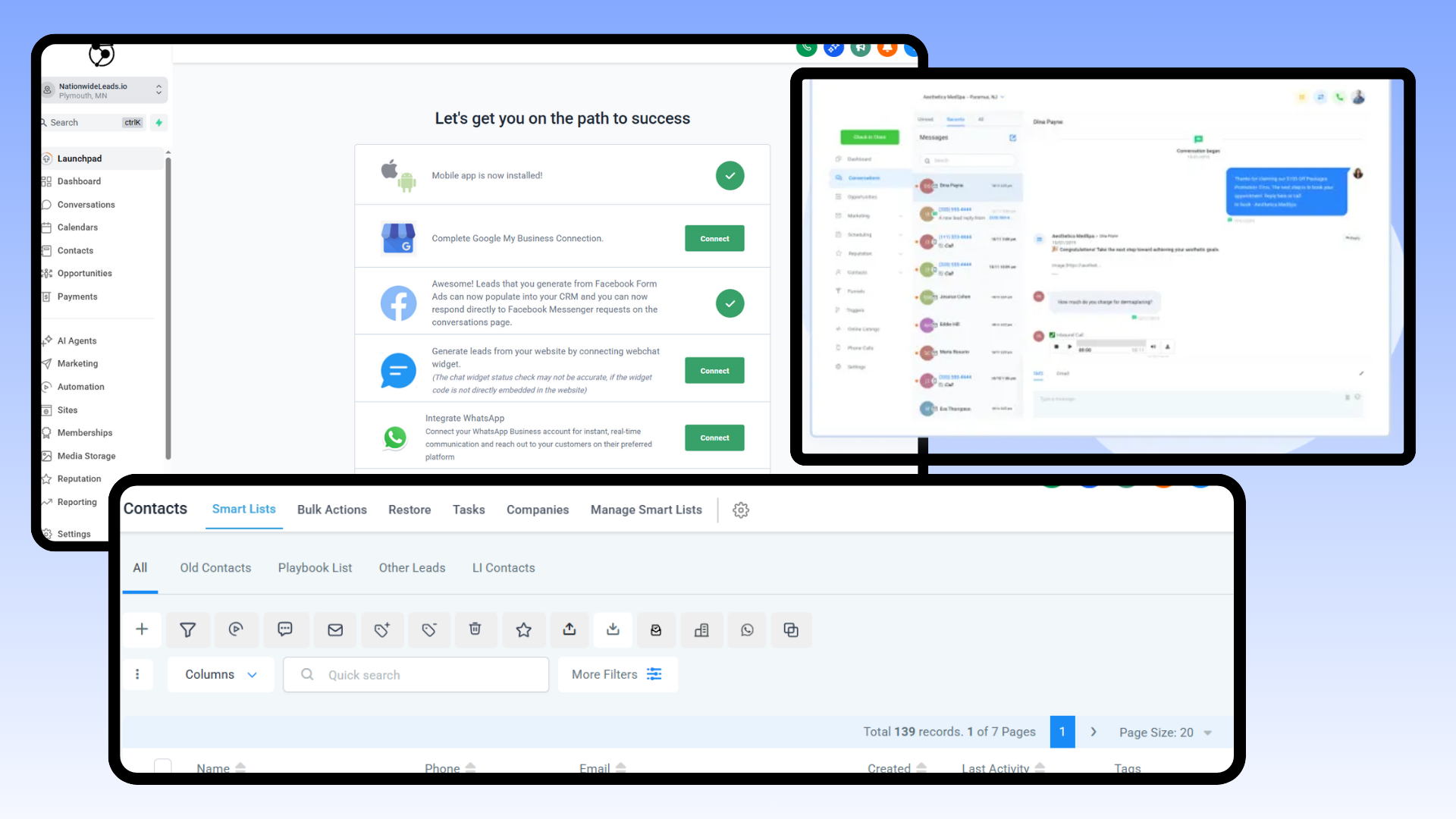
Loan officers operate in fast-moving, regulated environments where the right CRM features can make or break productivity. The best customer database software for this industry syncs with loan origination systems (LOS), pricing engines, compliance tools, and referral partner management while being simple enough to use on a phone every day.
Below is a list of core CRM features that boost efficiency for loan officers:
Visual pipeline tracking
Auto monitor current client rates for refinancing
Digital document collection and compliance
Referral partner tracking and analytics
Mobile-friendly dashboards and reminders
Display latest mortgage rates on website for leads
Automated compliance checks and guideline verification
1. Lead management
A powerful CRM should empower officers to categorize and monitor leads effectively, so that no lead slips through the cracks. With lead scoring, the system emphasizes which leads are most likely to qualify or close soon, guiding teams to expend efforts where it matters.
Automatically assigning leads based on source or territory saves time and avoids duplication of efforts. Every call, email, or meeting is logged so managers can tweak their strategy and loan officers can follow up at the opportune moment. For instance, once it tracks email opens and link clicks, it can trigger a follow-up call or text, keeping the lead in the funnel.
2. Loan Officer Specific Mortgage Tools

Automatically monitoring your client rates against the current rates for refinancing opportunities is one of the most power tools available to loan officers. Plus, with the help of communication and marketing automation tools in one place like email, texting, phone or even voice drop, identifying refinancing leads and nurturing them automatically has never been easy
Plus, create interactive and highly engaging landing pages by adding latest mortgage rates widgets. This is not only informative but effective in mortgage load lead gen. The best part is, you can automate the entire lead management process and get notifications only when you need to act
3. Pipeline visualization
A visual sales pipeline offers immediate feedback as to where each client is in the loan process. This assists teams in identifying bottlenecks, such as missing documents or delayed approvals.
With the help of in-built analytics, loan officers can estimate how many deals can be closed this month or quarter. Visual tools keep everyone on the same page and let your clients view their status, too, reducing ‘where’s my loan?’ calls. Problems are spotted quickly, so officers can act before deals stall.
4. Automated communication
Automated workflows keep clients and partners informed at every stage, minimizing manual follow-up. Tailored messages by application status or loan type enhance engagement.
For instance, the CRM can send a cordial nudge if a document is absent or a rate lock is expiring. Canned responses take care of standard questions, leaving officers more time for complex cases. Scheduled reminders help your teams follow up on time, so opportunities do not slip through the cracks.
5. Document collection
Digital tools allow clients to conveniently upload forms and paperwork securely from their phone or computer. The CRM monitors what is absent, dispatches reminders, and records everything in an all-encompassing place for compliance inspection.
Automating document requests translates into faster processing and less chasing. Secure portals instill trust, as clients are aware their information is safe.
6. Referral partner tracking
Officers lean on real estate agents, attorneys, and other partners for leads. The CRM tracks what partners are sending the most business and automates commission tracking.
Analytics reveal which referral programs are most effective, enabling teams to intensify efforts that yield results. Shared dashboards and updates keep partners in the loop and strengthen relationships.
How top mortgage CRM software solves daily challenges

Mortgage professionals face an onslaught of daily tasks, pressing deadlines, and constantly building client relationships. Top mortgage CRM software helps cut through this confusion by providing tools designed for loan officers and their teams. These client database software platforms integrate lead capture, client management, task tracking, and document storage in a single location, which organizes the entire process from initial contact through closing.
One of the biggest headaches in this industry is managing a blended lead source, all at different stages, all with differing needs. Top mortgage CRM software solves this by letting your sales teams monitor where each prospect sits in the pipeline, whether it’s a new inquiry from an online ad or a referral who’s ready to be pre-approved.
With built-in lead source tracking and automated workflows, top mortgage CRM software sorts leads by value, urgency and likely conversion so your team’s time goes to the prospects most likely to close. For instance, a CRM can flag a high-value lead imported from a real estate partner, schedule follow-up tasks for the following day and initiate an automated email series to nurture the relationship.
Another big challenge is remaining productive when a lot of your day is spent doing grunt work, such as sending follow-ups, logging calls, or updating records. Leading mortgage CRMs have marketing automation that tackles tedious tasks, like follow-up messages or document-gathering nudges, making them effective customer database software platforms.
That translates to less work recording information and more time on high-level activities, such as developing connections or discovering new deals. For instance, with automation, a loan officer can schedule a text reminder for clients to upload documents or check-in emails throughout the application process without lifting a finger every time.
Customer service is another sphere where CRMs shine. With a complete history of each client’s conversations, preferences, and documents, anyone on the team can step in and assist—even if a teammate is away. Being able to get to this information quickly helps them troubleshoot problems more quickly and keep clients happy.
With mobile access, teams can update records or respond to leads from anywhere—at home, in the office, or on the road. Collaboration is crucial in the mortgage universe. Deals come with a lot of pieces and different people, making a dedicated sales CRM essential.
Thanks to shared databases and built-in team communication tools, everyone sees the same data and tracks tasks in real time. That way you don’t drop balls, do duplicate work, or miss deadlines. Shared calendars, internal messaging, and status updates keep everyone on the same page, so teams produce a seamless client experience time after time.
Choose the best customer database software
Choosing the right customer database software is about more than just selecting a tool. It’s about aligning your business’s specific needs with workflow-optimizing features. Whether you’re focused on sales pipeline management, affordability, or marketing automation, the right software should let you track all four types of customer data: identity, engagement, behavioral, and attitudinal.
A customizable dashboard, good integrations, and clear pricing are important. Dependable support and an intuitive interface are important, particularly to small business owners and solopreneurs who need to get going quickly without a long learning curve. Here’s a comparison of some widely used customer database solutions:
Integration
Seamless integration is key for businesses. The transition from old systems should be smooth with little downtime or confusion. APIs allow you to easily plug in LOS of POS to relationship management tools. A unified dashboard helps sales teams see the complete customer journey, ensuring nothing slips through the cracks.
Map out all current tools and systems needing integration.
Check the software’s API documentation for compatibility.
Conduct test data migrations to check that data migrates without loss.
Connect third-party apps for wider reach.
Maintain a single customer view by linking channels.
Compliance
With built-in compliance tracking, you can keep an eye on who’s playing by the rules. Secure storage safeguards sensitive customer data, and as rules evolve, periodic refreshes to the CRM system help prevent expensive blunders.
Look for GDPR and CCPA compliance features.
Ensure audit trails and permission controls are built-in.
Encryption for data in transit and at rest is non-negotiable.
Automated alerts for policy breaches ensure you stay on course.
Scalability
Select software that grows with your business, not against it. As you bring in more clients, ensure the system can handle additional contacts, users, and information without slowdown or additional hassle and costs.
See if you can add new tools or users as needed. Many systems allow you to begin with a small footprint and then scale up features as your requirements evolve. That way, you’ll never outgrow your investment and your CRM keeps pace with your strategy.
Beyond the features: The human element

Customer database software does a lot more than hold data; it serves as a powerful customer relationship management (CRM) tool. For anyone in the mortgage space or really any relationship-driven business, what really counts is how tech helps you treat each client like an individual, not just a statistic. Even as tools get smarter, personal relationships are still at the heart of trust and repeat business.
The best customer database software platforms are those that fit the way people actually work, not the converse. It should fit seamlessly into daily habits, not bog them down with additional steps or baffling screens. A straightforward dashboard, intuitive navigation, and speedy search features go a long way for sales teams who work at a rapid pace and have to stay on top of a number of moving pieces.
Training staff to use these sales tools effectively is key. Effective onboarding is about a lot more than distributing a manual. It’s about demonstrating how to use reminders for follow-ups so no lead goes cold, how to track calls and emails, and how to utilize built-in templates for quicker responses.
The right training minimizes errors such as entering data in an incorrect field or overlooking an update and makes everyone comfortable. Errors occur, but a dedicated sales CRM can help reduce them with automated checks such as duplication or missing record warnings. This translates into more precise client histories, less brain-ache, and a more seamless sales process all around.
Teamwork is another factor that counts. When everyone on the team can see the same real-time information, it’s simpler to collaborate, pass off leads, and keep deals moving. Collaboration features that let you share notes or flag tasks for others help teams work as one unit instead of in silos.
For instance, if a mortgage broker can immediately see what loan officer last talked to a client, it keeps the client experience effortless and professional. This type of collaborative client relationships is hard to achieve without the proper common ground.
Listening to feedback from users and clients alike ought to guide how you customize the CRM platform as time goes by. Employees may desire a quick method for routine actions, or customers may hope for better notification of upcoming meetings. Most platforms provide customizations allowing you to tailor fields, layouts, and automation to fit your processes.
As your team expands or changes its working dynamics, scalable business tools that can follow suit are essential. When things pop up, responsive support, preferably across channels such as chat, phone, or email, can be the difference between a minor hiccup and a lost deal.
Future-proof your mortgage practice

Mortgage technology is evolving quickly, and keeping your edge means using solutions that adapt as the market shifts. Your future-proof mortgage practice. The best mortgage CRM is more than a rolodex. It’s your day planner, paper handler, lead tracker, and campaign engine all in one. It’s not just for big companies—small teams and solo brokers need these tools to stay competitive.
Spreadsheets alone are too risky now. With a powerful CRM, you see your pipeline clearly, follow every deal, and never lose track of what needs to be done next.
Staying informed about new tech is key. Mortgage CRMs do more than ever now, including lead management, document uploads, and sending out marketing campaigns. They display each deal in real time, so you know precisely where each client sits. Mobile apps allow your team to check in, update files, or follow up leads from anywhere, whether it is a Toronto office or a coffee shop in Chicago.
Remote work is normal, and a CRM with a great mobile app is no longer optional. Training your staff is as important as choosing the right software. Even the best CRM is only as good as the people who use it. With continued support and training, your team will know how to configure automated workflows, route leads to the appropriate agents, and identify deals that require fast action.
This minimizes errors and time. For instance, if your CRM can route new leads to the appropriate broker by region or specialty, you avoid the back and forth and get that deal done sooner. Ongoing training, in-person or virtual, keeps everyone fresh as new features launch.
Customer expectations are changing. Home buyers want quick responses, transparent progress reporting, and simple online documents. A modern mortgage CRM allows you to send automatic updates, reminders, and even birthday cards. These touches breed trust.
For small teams, this means you can seem big and professional without adding personnel. The right CRM should be able to scale with you. As your business grows, you keep your costs low while you build your client base.
You require a nimble arrangement that can move when the market moves. Mortgage rates, client needs, and regulations shift rapidly. A CRM allows you to adjust workflows, introduce new fields, or initiate a new marketing push without needing to wait on a developer.
Visual pipeline tools let you see what’s working and where deals get stuck. This way, you can address issues ahead of time and stay on track, regardless of what the market dishes your way.
Conclusion
Great CRM transforms how small shops and solo pros treat clients. Loan officers and owners experience tangible benefits like quicker work, fewer mistakes, and superior service. Choose software appropriate to your size and style. Some require quick configuration and minimal viewing screens, while others require robust reporting or SMS reminders. Seek simple support, inexpensive tools, and tools that scale with you. No one wants tech ordeals. A good CRM simplifies life and allows you to focus on business and people, not computer monitors. Save your time and increase your deals with the best tools. Want to watch this work for your loan office? Try it for free
Frequently Asked Questions
What is a customer database software?
The best customer database software helps businesses enhance customer relationships, organize contacts, and monitor refinancing rates and communications effectively.
Why do loan officers need CRM features?
Loan officers deploy CRM features to capture leads, automate follow-ups, and track customer interactions. This enables them to be more efficient and build stronger collaborative client relationships.
How does mortgage CRM software help daily work?
Mortgage CRM software, a key component of effective customer database software solutions, automates tasks, organizes client data, and sends reminders, allowing loan officers to focus more on assisting clients.
What should I look for in the best customer database software?
When choosing the best customer database software, consider user-friendly interfaces, automation features, secure data storage, and integration capabilities with your CRM system to support business growth and enhance customer interactions.
Can customer database software improve team collaboration?
Customer database software, such as NationwideLeads, enables team members to view and edit client data on the fly, enhancing communication and collaboration across your business.
How does customer database software support compliance?
Software can help track customer interactions, securely store documents, and even automate compliance checks. This assists businesses in complying with sector laws and avoiding fines.
Will customer database software adapt to future needs?
Today’s best customer database software platforms are scalable and provide continuous updates, ensuring they can accommodate new features and expand with your company, keeping your sales teams ahead of the curve.