
How to use CRM as loan officer for cloud-based workflow automation
Cloud-based workflow automation refers to the utilization of cloud computing technologies to automate various workflows and processes within an organization. Many small firms are already using these types of systems to reduce busywork and save cash on tech.
With easy drag and drop steps, owners can follow sales, emails, or alerts from wherever. In this blog we will demonstrate how they assist small businesses especially loan officers expand cost-effectively.
Key Takeaways
Implementing a CRM system is a must for loan officers looking to simplify client management, automate communication, and centralize data to maintain better control over their workflow.
Integrating your CRM with your LOS improves data accuracy, minimizes manual entry, and drives improved collaboration between your team by making vital information accessible in real-time.
Cloud-based workflow automation enhances operational efficiency and improves data security and compliance across various regions.
High-level automation, like scoring analytics and trigger-based marketing, allows loan officers to pinpoint the most promising leads, optimize their follow-up efforts, and better allocate resources.
Post-close nurturing through CRM guarantees long-term client satisfaction by automating ongoing support and monitoring feedback for potential future refinancing opportunities.
Overcoming implementation challenges demands a thoughtful strategy, committed employee education, and constant oversight to achieve widespread acceptance and optimize organizational gains.
Table of Contents
How to use CRM as a loan officer
Advanced automation strategies
Scoring and Predictive analytics
Overcoming implementation hurdles
The future of lending automation
What is cloud-based workflow automation in lending?
Why is a CRM essential for loan officers?
How does Loan Origination System (LOS) integration benefit automation?
What are some advanced automation strategies in lending?
What are common challenges when implementing automation in lending?
Why a CRM is non-negotiable

Your marketing won't be effective long term if you don’t have a system in place to track and cultivate relationships. This is where a CRM acts as the backbone. A CRM helps you manage every customer touchpoint, from first contact to closing and follow-up. Without a CRM, client info slips through the cracks, deals fall by the wayside, and teams waste precious time on repetitive tasks that could be done more quickly once equipped with workflow automation software.
Know why a CRM is non-negotiable. A CRM keeps all customer info in one place, so you can easily pull up past deals, calls, emails, and notes. That translates to less time filing and more time connecting. For loan officers, this is key since clients demand quick responses and transparent status updates. With all data in one place, it is easy to identify trends and requirements, enhancing the overall efficiency of business processes.
Teams can swap info seamlessly, and no one is out of the loop. It keeps your business safe. AI-powered CRMs scan for data breaches and flag policy issues, helping you stay compliant and avoid expensive errors.
Loan clients expect a silky-smooth ride from application to approval. A CRM allows you to view every stage and identify where your clients require assistance. When clients receive rapid, transparent communication updates, they feel appreciated. This builds confidence and brings them back, reinforcing the importance of effective workflows.

By having all channels in one place—email, phone, chat—CRMs provide a comprehensive view of every customer’s journey. If a question arises, any team member can step in with the necessary information. It’s this care that keeps them loyal and likely to refer their friends or come back when they need more, proving that a workflow automation platform can significantly enhance customer experience.
CRMs do a lot more than just hold names and numbers. They log leads, reminders, automated follow-ups, and even scoring analytics to identify which deals require attention. For small teams or solo operators, that translates into less busywork and fewer missed opportunities, showcasing the power of business process automation.
High-end CRMs inject hyper-automation, integrate with cloud apps, and extract information in real-time. This lets loan officers focus on borrowers, not paperwork, and make decisions using real-time data. Built-in reporting helps you spot trends and create smarter plans, demonstrating the effectiveness of workflow management software.
Why a CRM is a must? Good CRMs aggregate messages from all channels and record every touch. This prevents information from falling through the cracks. Automation takes care of trivial mechanics, such as sending reminders, scheduling calls, and flagging overdue items, so teams can spend their time helping clients.
Real-time dashboards display how the business is doing, allowing leaders to respond quickly if things shift. Over time, this translates into stronger teams, better client experiences, and a healthier bottom line, highlighting the necessity of adopting a robust CRM system for any enterprise.
How to use CRM as a loan officer
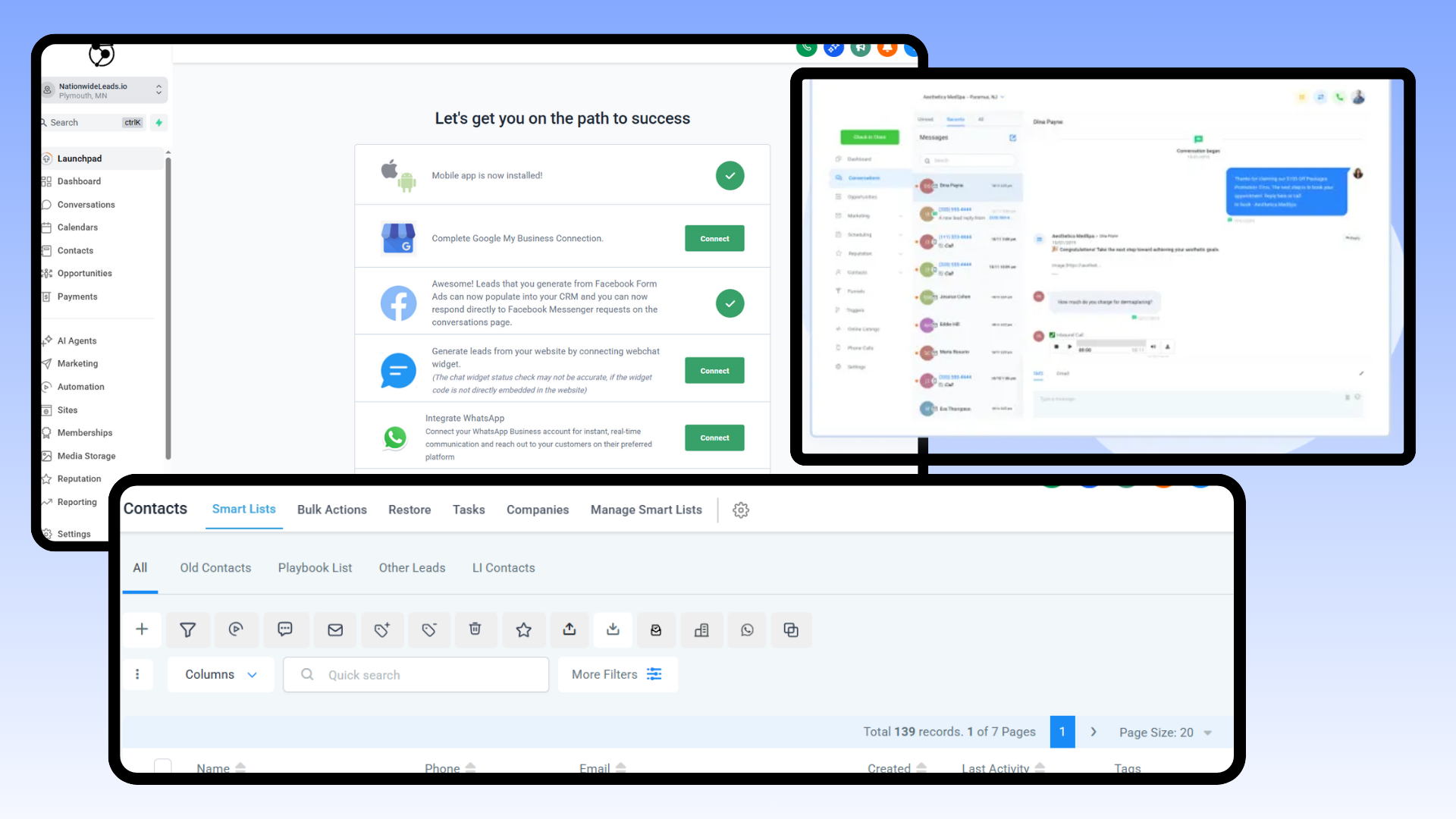
A CRM system is key for loan officers to track every client detail, organize loan files, and utilize workflow automation software to automate follow-ups all in one platform. With cloud-based workflow automation, you gain secure access from anywhere and time-saving tools that eliminate repetitive tasks. This assists with compliance requirements and keeps customer information secure while streamlining daily loan management.
1. Centralize data
A cloud CRM allows you to have all of your client information, loan applications and documents in one system. This simplifies quick info discovery for you and your squad whether you’re in the office or on the go. It keeps everything neat and away from messy spreadsheets and email threads.
Automating data entry reduces errors and keeps information current. When you connect your CRM to online forms or LOS systems like ARIVE to NationwideLeads, you bypass manual entry. This saves time and reduces errors.
Having all client communications, notes, and documentation in your CRM implies you never lose sight of where you left off with a borrower.
Cloud automation strengthens security with encryption and role-based access. It can assist with compliance checking, like with GLBA, by monitoring modifications and who viewed confidential information.
2. Automate communication
Automated reminders and follow-ups keep you in touch with clients at the appropriate moments. For example, you can configure the CRM to remind you to collect documents or make payment deadlines, keeping deals on track. You can send notifications at every step of loan process
It’s easy to personalize outreach when you consistently update the CRM with client preferences and history. Automated email campaigns nurture leads without manual work, leaving you free for other tasks.
Built-in chat and message tools simplify team communications for sharing updates and collaboration. This keeps everyone in the loop and expedites the loan process.
3. Monitor opportunities

CRMs include dashboards to display which leads are hot for refinancing or new loans. You can identify client patterns, like openers of your emails, and follow up accordingly.
For example, tools like NationwideLeads allow you monitor your existing client rates against market rates for refinancing and then launch email, voice drop or text campaign automatically
Reporting features display how your pipeline is performing. You can see which deals get stuck, how long each stage takes, and where you lose applicants.
By setting alerts for steps such as appraisal or closing, you ensure you don’t miss deadlines.
4. Streamline pipeline
Integrating your CRM and LOS systems allows data to flow without copy-paste by hand. This results in a streamlined loan process, from initial contact through to closing.
You can automate trivial tasks such as sending document requests or status updates to save time. Visual loan tracking boards in the CRM display each loan’s stage.
It is obvious where each deal sits and what is next. Workflow automation drives loans from step to step without lag.
5. Analyze performance
CRM analytics reveal how you and your team are performing. You track how fast loans close, how happy clients are, and where you can improve.
Reports assist in identifying trends, such as which loan types progress the quickest or where the majority of leads abandon the process.
Use these insights to tweak marketing, train staff, or adjust follow up. Smarter decisions lead to more deals closed.
The power of LOS integration

Cloud-based workflow automation transforms how small lenders and businesses work by allowing disparate systems to communicate in real time. When the CRM tools connect with a loan origination system (LOS), that’s less manual work and fewer errors. Data flows directly from X to Y, so teams never have to enter the same info twice.
This time saving and reduced chance of human error make users trust their numbers and work faster. In practice, a customer’s application information flows from the CRM directly into the LOS, reducing input errors and omissions. Small lenders can view all customer information in a single, convenient location, streamline trend identification and drive actionable response.
For that, having a “single source of truth” is key. LOS integration consolidates all customer information, allowing lenders to stay consistently informed of the status of each application. This allows them to make smarter calls, identify customer demands, and customize their pitches.
A business can leverage this data to send the appropriate message at the appropriate time via email or text. For example, the system can send a note when a loan application advances to the next stage, involving everyone in the process. Since it’s all in the cloud, this is simple to scale up or down. A lender can scale without massive updates to their tech stack, and they can pivot to new markets or products quickly.
Teams collaborate better with live data sharing. When sales, underwriting, and support all see the same info, they can solve problems faster and avoid mix-ups. All parties are aware of the loan’s status, so calls and emails remain focused.
A customer calls in; support can pull up their full loan history and answer questions right there on the spot. Integration with third-party data, such as credit or financial records, further streamlines the process. That translates into speedier approvals and reduced documentation for borrowers.
Security and compliance issues are important. LOS integration keeps customer information safer, assisting lenders in complying with regulations and safeguarding data. With automated checks and audit trails, it is easier to prove compliance if the need arises.
That is a relief for small businesses that do not have big legal teams!
Below is a quick look at the benefits of integrating CRM with LOS:
Advanced automation strategies

Cloud-based workflow automation has evolved significantly beyond simple task routing. Today, advanced automation strategies empower small businesses and lending operations to achieve more with fewer resources, reduce costs, and maintain compliance with data security. Firms are increasingly deploying a hybrid of business process automation and robotic process workflows to effectively manage intricate lending processes.
No-code and low-code platforms facilitate the creation of customizable workflows, enabling non-technical users to establish automation quickly, even in microbusinesses. With the right workflow management software, you can minimize manual errors, speed up approvals, and automatically resolve network issues through embedded controls that ensure seamless workflow execution. Most cloud automation systems now feature auto-scaling capabilities.
This allows small businesses to expand or reduce resource usage as transactions surge or decelerate without unused expenditure. By linking automation to your CRM, you can do more than just remarketing to leads; you can send the perfect product recommendations and promotions, which increases loyalty and sales over time.
Scoring and Predictive analytics
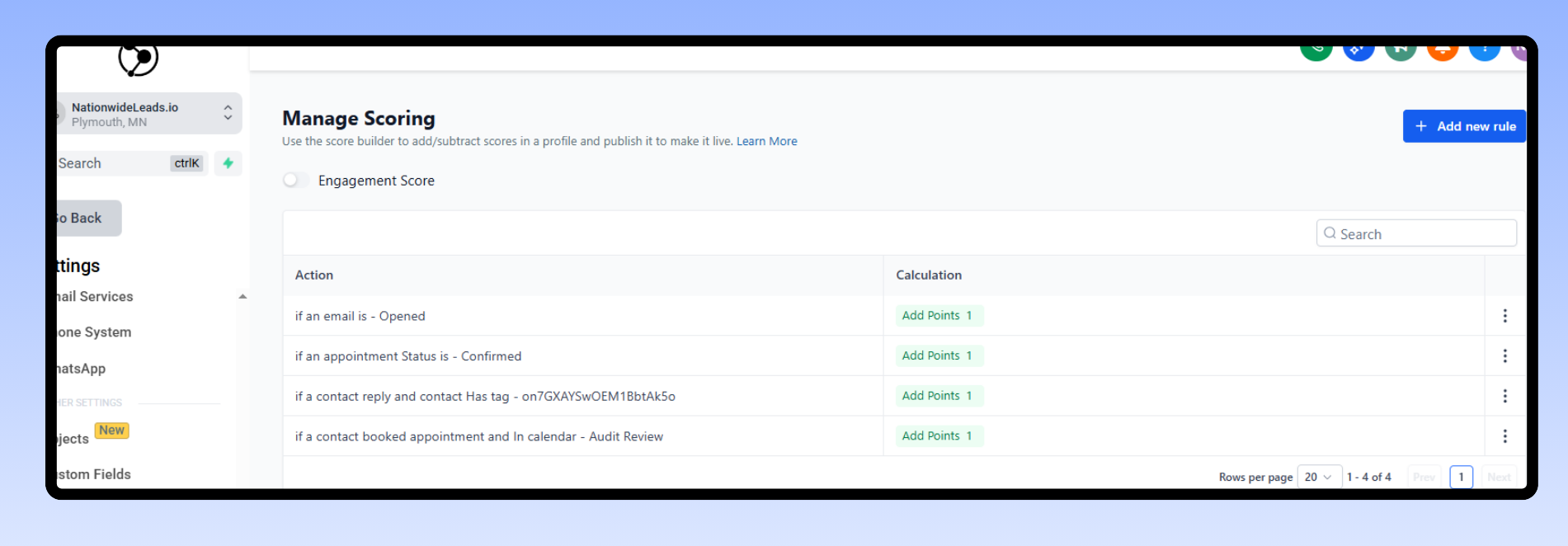
Integrating scoring and predictive analytics with cloud workflow automation in CRM systems enables lenders and small businesses to accurately forecast loan performance. By analyzing historical data and trends, you can pinpoint which leads are most likely to convert and identify loans that may show early warning signs. This not only helps manage risk but also empowers owners to provide informed advice to clients and select the best loan products to offer.
Analytics can guide resource allocation, ensuring that you focus on viable leads rather than wasting time on unproductive ones. Moreover, data can optimize the timing of follow-ups, allowing service teams to reach out to clients when they are most likely to respond. For example, if analytics reveal that a specific segment of clients prefers mid-week calls, workflow automation can seamlessly schedule these calls.
This makes outreach more relevant and less intrusive, thus delivering superior results for both parties.
Trigger-based marketing
With trigger-based marketing, you can communicate to your customers at exactly the right moment. When a client does something important, such as submitting a loan application or clicking an email link, the system can respond with a personalized message, offer, or reminder, all without manual effort. This establishes rapport and keeps your company front and center.
You can tap CRM data to automate these messages, personalizing each one based on behavior and preferences. Campaign effectiveness is simple to follow. Identify what triggers and messages convert, then optimize for maximum results. With automated nurture flows, fewer leads slip through the cracks, handoffs are smoother, and you spend less time chasing clients by hand.
Post-close nurturing

Staying top of mind with clients post-closing is critical for retention and referrals. Utilizing workflow management software can enhance your CRM tools to touch base on client satisfaction and feedback. This feedback can inform future offers or address problems before they escalate. Automated workflows can encourage clients to refinance or explore new products at just the right time.
Of course, schedule check-ins at 6, 12, and maybe even 24 months down the road post-close.
Provide satisfaction surveys and ask for reviews through email or SMS.
Get alerts for rate changes, new products, or refinance windows.
Automate invites to webinars or client appreciation events.
Overcoming implementation hurdles

Cloud-based workflow automation provides massive benefits for small businesses hoping to work smarter and maintain low costs. Real-world struggles still tend to get in the way. Identifying these hurdles early is how small business owners can position their teams for success. Getting to the bottom of these implementation hurdles is essential to constructing automated workflows that really do stick and provide value from day one.
One big issue is legacy integration. A lot of companies operate mission-critical processes on aging, internal systems that don’t communicate well with modern cloud platforms. Indeed, 58% of enterprises report legacy system integration as their top challenge migrating to workflow automation software. ERP rollouts are sometimes pushed back 6–12 months just attempting to make old and new tech work together.
This isn’t just a big company problem—smaller firms frequently discover they’ve accumulated spreadsheets, email rhythms, and ad hoc systems that are difficult to connect to a new tool. The more patchwork your old rig, the more time and money it requires to hook things together. It’s clever to first chart your existing business processes, identify any data silos, and select an automation platform that integrates well with your existing stack.
💡 A platform with free onboarding offers a cost-effective and peace of mind way to settle in quickly. Plus, it enables you to create an early rapport for reliable customer support long term
For instance, an easy plug-in between your e-commerce site and your CRM can prevent manual re-keying and errors. Siloed processes are yet another implementation stumbling block. A lot of small businesses have marketing, sales, and support teams working in silos. As a result, their workflows are fragmented and their data doesn’t align, making automation difficult.
If customer data in your CRM doesn’t align with what’s in your invoicing app, it’s difficult to automate anything consistently. Lining up data standards, cross-team planning meetings, and shared goals can take you far. Low-code platforms are a godsend here. They empower business users to craft customizable workflows themselves, can accelerate adoption by as much as 60%, and help reconcile business and IT priorities.
Employee resistance to change is a significant obstacle. Humans are instinctively wary when blasters and hover cars endanger their habits or employment. This results in poor adoption and wasted tools. Training is the solution. Hands-on demos, quick videos, and continuous support make employees comfortable with new software.
Begin with what’s easy, let them test-drive, and celebrate those fast wins to get buy-in. Continued monitoring is as important as planning. Monitor adoption, collect input, and iterate to surmount friction or technical glitches. Just having regular check-ins and providing support when questions arise can have a huge impact.
Occasionally, even minor adjustments like scrubbing a form or automating a manual step can lift spirits and give teams a taste of the magic of automation.
The future of lending automation

Lending is racing to the cloud, where automation isn’t a sidebar tool; it’s the engine driving the entire experience. The future will be lending built around connected, flexible systems that scale fast when necessary. Cloud-based automation enables lenders to engage real-time data, which makes it easier to identify risk and respond promptly. That sort of system is great for tiny teams and giant banks alike.
For small business owners, it means less time wasted on snail-paced paperwork and more time assisting customers or constructing their brand.
Lending data tends to be scattered everywhere. Spreadsheets, emails, legacy databases, and even paper files create a headache. Automation tools now connect to all these data sources. For instance, CRM software can extract customer data from one’s email, update records, scan credit history, and generate alerts if something requires follow-up.
Robotic process automation (RPA) handles tedious work like data entry, form verification, or number matching, all without fatigue or error. This has loan files moving from start to finish faster, and customers no longer have to endure days of silence for a simple answer.

API-driven automation is transformative. APIs allow these various systems to communicate with each other, so when a borrower applies for a loan, the information flows directly into the CRM, triggers a checklist, syncs with document storage, and sends documents where they need to go for review.
This connected workflow allows you to quickly know where every loan sits, who needs to do what, and what’s missing. Lenders never get buried in emails or lost files. For a small business owner with a CRM, this translates into improved service and fewer lost deals.
To achieve tangible results, lenders need to look beyond legacy LOS. A real automation plan begins by charting every step of your existing process. Where does work stall? What steps recur or goof up?
By discovering these pain points, teams can implement automation where it helps most, such as immediate credit checks or digital signatures. Automation not only accelerates things, it reduces mistakes and allows employees to concentrate on what’s important, such as speaking with customers and troubleshooting, not paper pushing.
Conclusion
To maximize the benefits of cloud-based workflow automation, small lenders desire tools that eliminate busywork and expand their customer base. CRM and LOS links make the grind easier, from sourcing leads to closing loans quickly. New features such as smart alerts and built-in chat save you time and make your team appear sharp and on point. Most people experienced bumps at first—familiar habits and stubborn tech—but strong support and an incremental initiation can remedy that quickly. The industry embraces pace, fewer mistakes, and more victories for employees and customers alike. Try our CRM for free or book a chat to start your growth journey.
Frequently Asked Questions
What is cloud-based workflow automation in lending?
Cloud-based workflow automation utilizes workflow automation software to manage regular lending processes. By linking data and processes in real time, loan officers can execute automated workflows, work faster, and enhance customer service.
Why is a CRM essential for loan officers?
CRM keeps client information filed away and available, serving as a workflow management tool that assists loan officers in lead tracking, communication management, and automated workflows, resulting in better customer relationships and increased productivity.
How does Loan Origination System (LOS) integration benefit automation?
LOS integration links your CRM and other tools directly to the loan processing, utilizing workflow automation software to minimize manual input, maximize time savings, and accelerate the full lending lifecycle.
What are some advanced automation strategies in lending?
Advanced strategies include workflow automation software for automating document collection, credit checks, and client notifications. These automated workflows help you save time, keep your clients informed, and stay compliant with industry regulations.
What are common challenges when implementing automation in lending?
Typical issues in business process automation consist of data transfer, personnel education, and inertia. Opting for intuitive workflow automation software and offering assistance can ease the shift.
How does automation improve compliance in lending?
Automation follows every step in business process automation and keeps records safe, minimizing mistakes while ensuring compliance with legal and industry standards.
What is the future of lending automation?
The future of lending automation encompasses advanced technologies like artificial intelligence and machine learning, which will enhance workflow automation, leading to faster approvals, better risk assessment, and a more personalized experience for borrowers.